
 Thabo Nkosi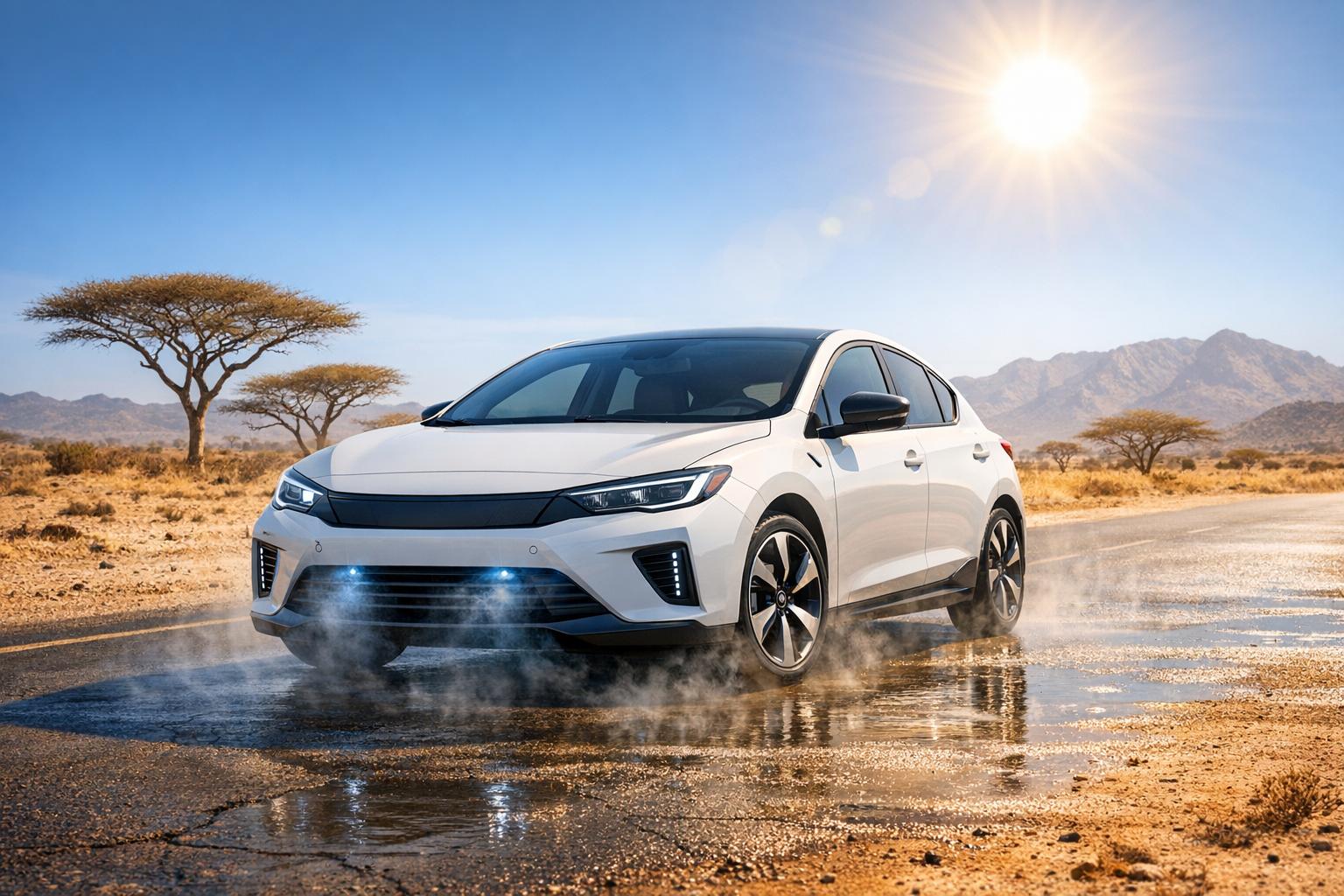
Hot climates can seriously impact your EV battery’s lifespan, performance, and safety. Here’s what you need to know:
- Heat reduces battery life: High temperatures accelerate chemical reactions inside the battery, leading to faster wear and capacity loss.
- Driving range drops: In extreme heat (115°F+), energy consumption increases by 28%, and driving range can decrease by 16–22%.
- Thermal stress matters: Parking in direct sunlight and charging during peak heat hours can cause further damage.
- Safety risks: Extreme heat can trigger thermal runaway, a dangerous chain reaction that may lead to fires.
- Maintenance is key: Regular coolant checks, software updates, and proper charging habits can slow degradation.
Best EVs for Hot Weather
Models like Tesla (Model 3/Y), BYD (Atto 3), and Hyundai (Ioniq 5/6) feature advanced cooling systems or heat-resistant batteries, making them better suited for hot climates.
How to Protect Your Battery
- Park in shaded areas or use reflective covers.
- Avoid charging during the hottest hours.
- Use slower chargers (Level 1 or 2) instead of fast chargers.
- Maintain a charge level between 30–70%.
Taking these steps can help you extend your EV’s battery life and reduce ownership costs in hot regions like Africa.
How Hot Weather Damages EV Batteries
Heat Speeds Up Chemical Reactions in Batteries
When temperatures rise, chemical reactions inside EV batteries speed up, leading to unwanted consequences. One major issue is the excessive growth of the Solid Electrolyte Interphase (SEI) layer on the battery’s negative electrode. Normally, this layer forms naturally and reduces capacity by about 10%. However, extreme heat makes the layer grow thicker, trapping lithium ions and further depleting the battery’s capacity.
Heat also breaks down the electrolyte. For example, salts like LiPF6 decompose at higher temperatures, forming hydrofluoric acid (HF), which can corrode electrode materials. Structural changes in the positive electrode can occur as well, shifting it from a stable layered arrangement to disordered phases. This not only releases oxygen gas but also increases internal resistance. Gregory J. Offer from Imperial College London highlights the issue:
"Temperature is the most significant stress factor, where deviations from the typical 25°C can lead to accelerated failure."
– Gregory J. Offer, Imperial College London
These reactions, when left unchecked, can escalate to dangerous thermal events.
Thermal Runaway Risks in High Temperatures
Extreme heat can trigger a phenomenon called thermal runaway. This is a self-sustaining chain reaction where the battery’s temperature skyrockets, reaching over 1,112°F (600°C) in just minutes. During thermal runaway, batteries may release hazardous gases, which can lead to fires or explosions. EV Fire Safe explains the process:
"When the generation of heat becomes self-sustaining – the heat releases energy, and the energy in turn releases more heat – the cell is experiencing thermal runaway."
– EV Fire Safe
The dangers of thermal runaway make temperature management critical for EV safety.
Reduced Battery Range and Lifespan
Hot weather doesn’t just increase safety risks – it also impacts performance. High temperatures can raise energy consumption by as much as 28%, cutting driving range by 16–22%. This happens because the thermal management systems in EVs must work harder to keep the battery cool. In fact, auxiliary loads, like cooling systems, can increase by about 50.3%, diverting energy that would otherwise power the vehicle.
Over time, this additional strain accelerates battery wear. While most EV batteries lose about 1.8% of their capacity annually, those in hotter climates degrade even faster. Considering that batteries make up over 35% of an EV’s total cost, faster degradation can significantly impact both long-term investment and resale value.
sbb-itb-99e19e3
Electric Vehicle Performance in Extreme Weather Conditions
EV Models with Better Heat Management Systems
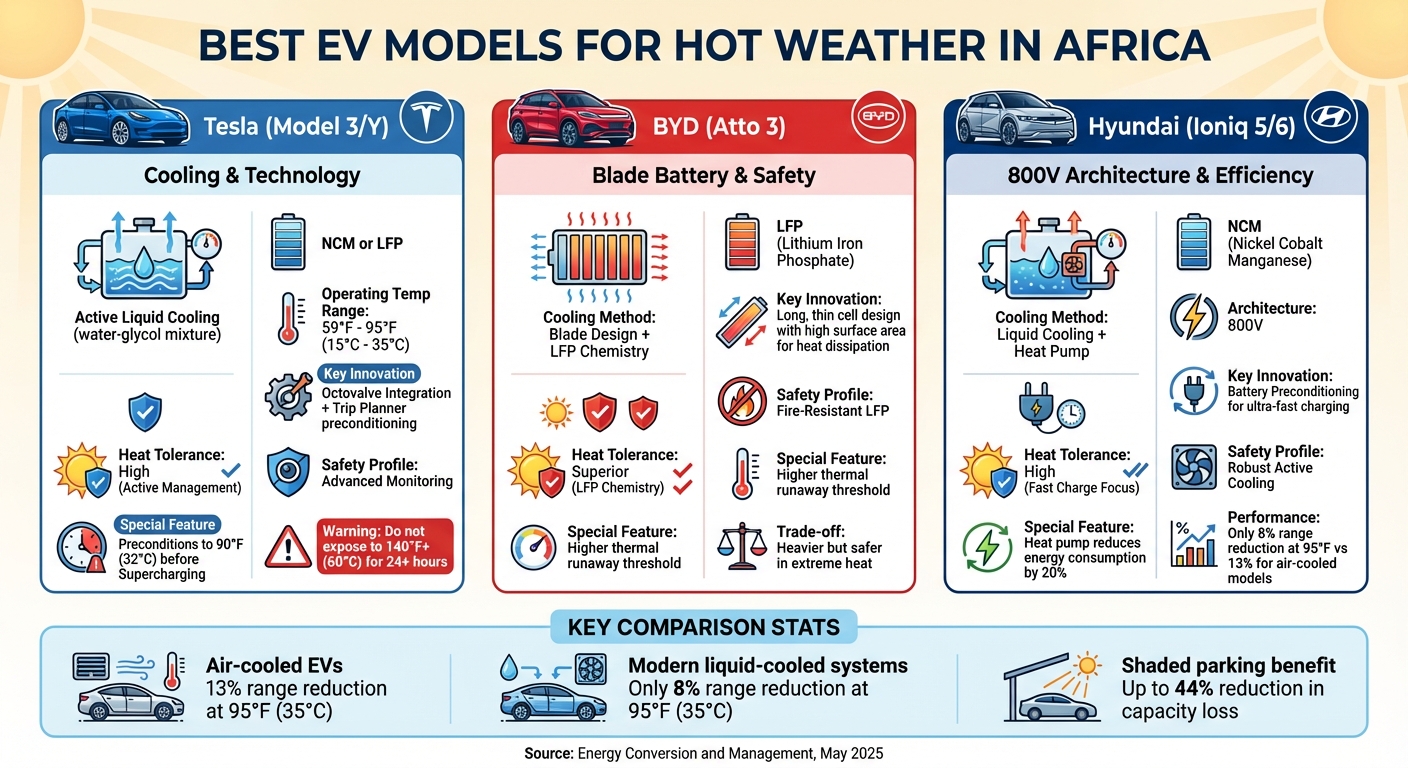
Best EV Models for Hot African Climates: Cooling Systems Comparison
Electric vehicles (EVs) rely on various thermal management systems to safeguard their batteries from the intense heat of regions like Africa. If you’re browsing EV24.africa, knowing which models come equipped with advanced cooling systems can help you avoid hefty battery replacement costs down the line.
Here’s a look at three standout EV models designed with cutting-edge cooling technologies.
Tesla Models: Liquid Cooling Systems
Tesla’s Model 3 and Model Y utilize active liquid cooling systems, incorporating a water-glycol mixture to maintain battery temperatures between 59°F and 95°F. These vehicles also feature a Trip Planner tool that preconditions battery temperatures for faster charging. Tesla advises keeping your car plugged in while parked, allowing the cooling system to operate using grid power rather than draining the battery.
The Trip Planner optimizes battery temperature to around 90°F (32°C) before arriving at a Supercharger, which reduces thermal stress and speeds up charging while minimizing wear. However, Tesla warns against exposing the battery to ambient temperatures above 140°F (60°C) for more than 24 hours, as even active cooling systems cannot prevent permanent damage under such conditions.
BYD Models: Blade Battery Technology
BYD employs a different approach with its Blade Battery, which uses Lithium Iron Phosphate (LFP) chemistry instead of the more common Nickel Cobalt Manganese (NCM) chemistry. LFP batteries have a higher thermal runaway threshold, making them safer in extreme heat. The Blade Battery’s long, thin cell design increases surface area, allowing better heat dissipation and reducing stress on the battery.
The BYD Atto 3, available on EV24.africa, benefits from this design. While LFP batteries are heavier and have lower energy density compared to NCM batteries, they are fire-resistant and better equipped to handle prolonged high temperatures.
Hyundai Models: Heat Pump and Battery Preconditioning

Hyundai’s Ioniq 5 and Ioniq 6 models focus on managing the intense heat generated during high-power charging. Both vehicles, equipped with an 800V architecture, come standard with heat pumps and battery preconditioning systems in 2021 and later models. These features ensure the thermal management system can handle the heat from ultra-fast charging, preserving battery health and performance.
A study published in Energy Conversion and Management in May 2025 tested EVs at 95°F (35°C). Air-cooled models showed a 13% range reduction, while modern liquid-cooled systems limited the drop to just 8%. Hyundai’s heat pump not only cools the battery but also transfers cabin heat, reducing energy consumption by up to 20%. This means more energy is directed toward driving rather than combating heat.
| Feature | Tesla (Model 3/Y) | BYD (Atto 3) | Hyundai (Ioniq 5/6) |
|---|---|---|---|
| Cooling Method | Active Liquid Cooling | Blade Design + LFP Chemistry | Liquid Cooling + Heat Pump |
| Battery Type | NCM or LFP | LFP (Lithium Iron Phosphate) | NCM (Nickel Cobalt Manganese) |
| Key Innovation | Octovalve Integration | High Surface Area Dissipation | 800V Battery Preconditioning |
| Heat Tolerance | High (Active Management) | Superior (LFP Chemistry) | High (Fast Charge Focus) |
| Safety Profile | Advanced Monitoring | Fire-Resistant LFP | Robust Active Cooling |
For those living in areas where temperatures frequently exceed 95°F (35°C), prioritizing these models on EV24.africa can ensure better battery performance and longevity.
How to Protect Your EV Battery in Hot Weather
Knowing which EV models are built to handle heat is just the beginning. The way you park, charge, and care for your EV plays a huge role in extending battery life, especially in Africa’s hot climates.
Where to Park and Store Your EV
Parking in the shade can lower the surrounding temperature by as much as 25°F, keeping your battery under the critical 86°F mark and cutting capacity loss by up to 44%.
"Parking a car in a garage or in the shade when it’s hot out can make a difference." – Green Car Reports
If you don’t have a garage, park under trees or use reflective shades. These simple steps protect your vehicle’s cabin and battery from direct sunlight. For longer parking periods in extreme heat, aim to keep your battery charged between 30% and 70% instead of fully charged. Batteries are more chemically stable at mid-range levels. If your EV has advanced thermal management, plugging in at a mid-range charge can further extend battery life.
But parking isn’t the only thing that matters – how you charge your EV also makes a big difference.
Better Charging Habits for Hot Climates
When you charge your EV matters. Aim to charge during the coolest times of the day, typically between midnight and 6:00 AM, to reduce thermal stress. Avoid charging during peak heat hours (12 PM–3 PM). After driving, give your EV 15–30 minutes to cool down before plugging in. Using your app to pre-condition the battery with grid power can also help conserve energy.
Stick to Level 1 or Level 2 AC chargers instead of DC fast chargers in extreme heat. Fast charging generates more internal heat, which can strain the battery. For daily use, set your charging cap at 80%. In areas with temperatures above 95°F (35°C), a range of 30-70% is even better for battery stability.
Beyond timing and charger type, exploring alternative charging solutions can add another layer of protection.
Using Solar Charging Stations
Solar charging stations provide a great option for EV owners in Africa. They offer not only clean energy but also more consistent power than many local grids. Solar setups often use slower AC charging, which is gentler on batteries in hot weather compared to DC fast charging. Look for stations with shaded canopies, as they help keep your car cooler while charging and make the thermal management system more efficient.
When plugged into any charger – solar or grid – your EV can draw power to run its cooling systems without draining the battery. This is especially useful in regions where temperatures regularly climb above 86°F (30°C).
Maintenance Schedule for EVs in Hot Climates
Living in a hot climate means your EV’s maintenance routine plays a big role in keeping the battery in good shape. In regions like Africa, where high temperatures are the norm, staying on top of coolant levels and software updates can help you avoid expensive repairs and keep your battery running efficiently.
Regular Coolant Checks
If your EV uses liquid cooling, the coolant is what keeps the battery from overheating. It’s recommended to check and refill coolant levels about every 36 months or 40,000 miles to ensure your thermal management system is doing its job effectively. Without enough coolant, the system can’t dissipate heat properly, which could lead to faster battery wear.
"Some automotive battery systems use liquid coolant to maintain safe operating temperatures. These systems may require regular checks."
Most modern EVs will alert you when coolant levels are low, but it’s a good idea to schedule periodic checks regardless. A little effort here can save you from the much bigger expense of replacing a damaged battery.
Beyond coolant, keeping your battery software updated is another way to extend its life.
Battery Diagnostics and Software Updates
Running a "State of Health" diagnostic once a year can help you catch early signs of battery degradation. Many service centers and dealerships offer this service, and some manufacturers even let you monitor your battery’s health through their mobile apps.
Software updates are just as important. These updates improve how your EV manages heat, charging limits, and voltage stress. For instance, Tesla’s software updates from 2021 onward have shown noticeable improvements in thermal regulation compared to earlier versions. Some updates even use navigation data to anticipate when cooling will be needed, activating the system before the battery gets too hot.
"Manufacturers also use these over-the-air software updates to optimise charging limits, improve cooling efficiency, and protect batteries from moisture or voltage stress."
To make the most of these updates, enable auto-updates on your EV and periodically check your settings to confirm you’re running the latest version. These updates are free and can significantly extend your battery’s lifespan, particularly in hot environments.
Conclusion: What African EV Buyers Should Remember
For African EV buyers, it’s crucial to recognize that high temperatures can have a lasting impact on battery capacity. Heat speeds up internal chemical reactions in the battery, and once this damage is done, it can’t be undone. However, adopting smart driving habits and choosing vehicles with the right features can help slow down this process significantly.
When shopping for an EV, look for models equipped with active liquid cooling systems. These systems are far more effective at managing extreme heat, especially in regions where temperatures frequently climb above 86°F (30°C) – a point where battery degradation accelerates. Brands like Tesla, BYD, and Hyundai offer models with advanced thermal management systems that can help extend your battery’s lifespan.
Daily habits also play a key role in protecting your EV’s battery. Simple practices like parking in the shade, keeping the battery charged between 60% and 70%, and allowing the car to cool down before charging can make a big difference. On particularly hot days, charging your EV more slowly can help reduce internal heat buildup, cutting capacity loss by as much as 44%.
Don’t overlook regular maintenance, either. Routine diagnostics and following manufacturer recommendations can help you catch potential issues early. By taking care of your battery, you’ll not only preserve a significant part of your EV’s value but also enjoy better range, a longer lifespan, and lower ownership costs over time.
FAQs
How can I protect my EV battery from heat damage in hot climates?
To help your EV battery last longer in hot climates, a few small changes can make a big difference. Start by parking in shaded areas or a garage to keep the battery from overheating. For daily use, try charging the battery to around 60–70% instead of going all the way to 100%. This reduces heat-related stress on the battery.
Another tip: use your car’s pre-conditioning feature while it’s still plugged in to cool the battery before you start driving. After a hot drive, give the car some time to cool down before plugging it in to charge. If you’re charging during extreme heat, opt for a slower Level 2 charger instead of a fast DC charger. These simple tweaks can help protect your battery’s health and keep it performing well, even in scorching temperatures.
Which EV models perform best in hot climates?
Some electric vehicles (EVs) are particularly well-suited for hot climates, thanks to their ability to handle high temperatures effectively. For instance, Tesla’s Model 3 and Model Y are standout options. These vehicles feature advanced liquid-cooling thermal management systems that maintain the battery’s optimal temperature, even when the outside temperature soars past 86°F. Similarly, the Nissan Leaf (2019 Plus version) excels in heat resistance, with updated battery chemistry and a cooling system that minimizes heat-related wear and tear.
Other noteworthy choices include the Chevrolet Bolt (2020 model), designed with an efficient thermal management system, and the Ford Mustang Mach-E, which incorporates pre-conditioning features to tackle heat challenges. The Hyundai Kona Electric and BYD ATTO 3 are also strong contenders. Both utilize liquid-cooled batteries, while the ATTO 3 benefits from LFP battery chemistry, known for its natural heat tolerance. These models deliver reliable performance and durability, making them excellent picks for buyers in warm regions.
How can maintaining a specific charge level protect EV batteries in hot weather?
To keep your EV battery in good shape, aim to maintain its charge level between 60% and 70%. This range helps minimize heat buildup during charging, which is crucial because excessive heat can accelerate chemical reactions inside the battery. Over time, these reactions can cause the battery to wear out faster and shorten its lifespan. Sticking to this charge range is especially important in hot climates, as it can help slow down battery degradation and support better long-term performance.