
 Thabo Nkosi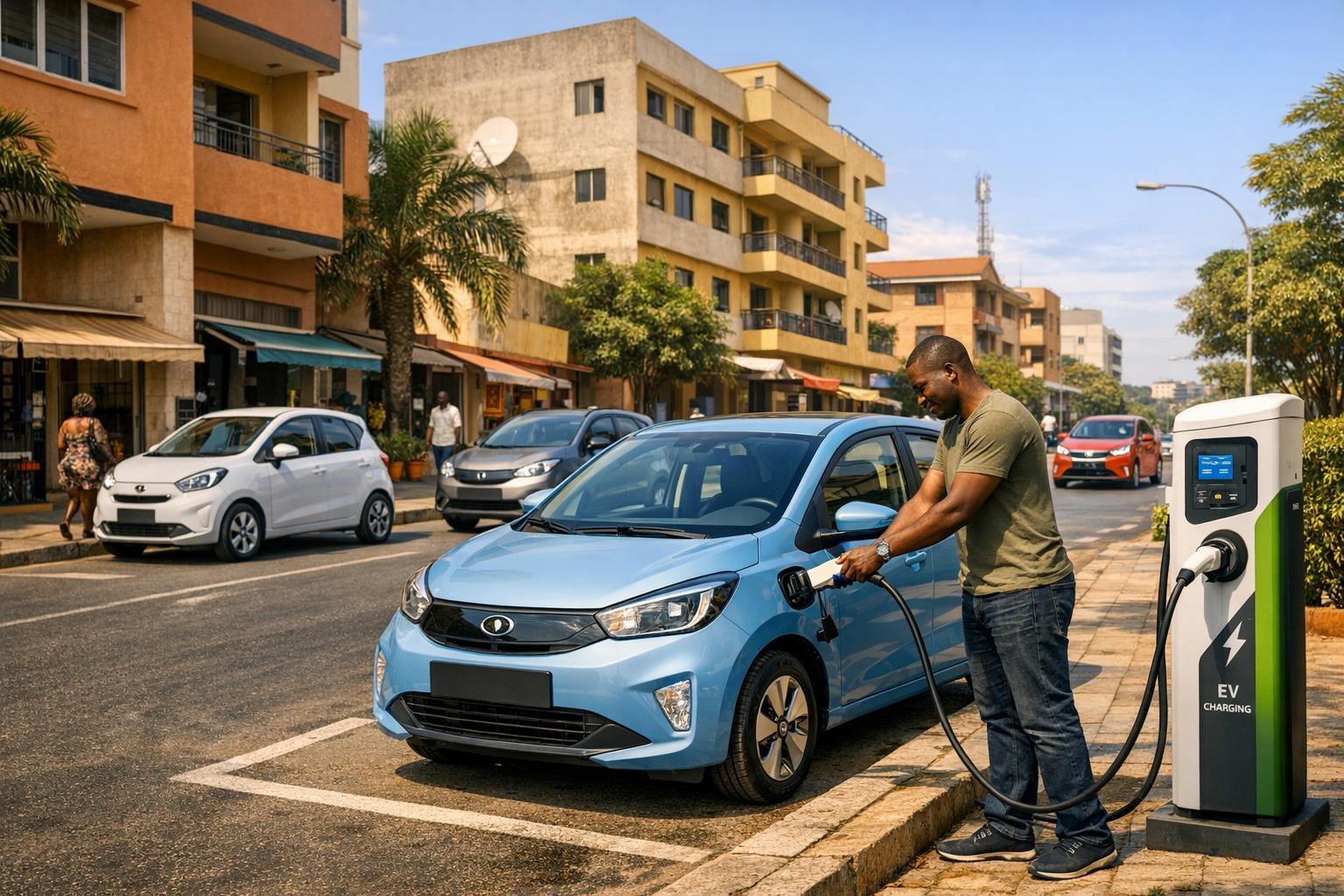
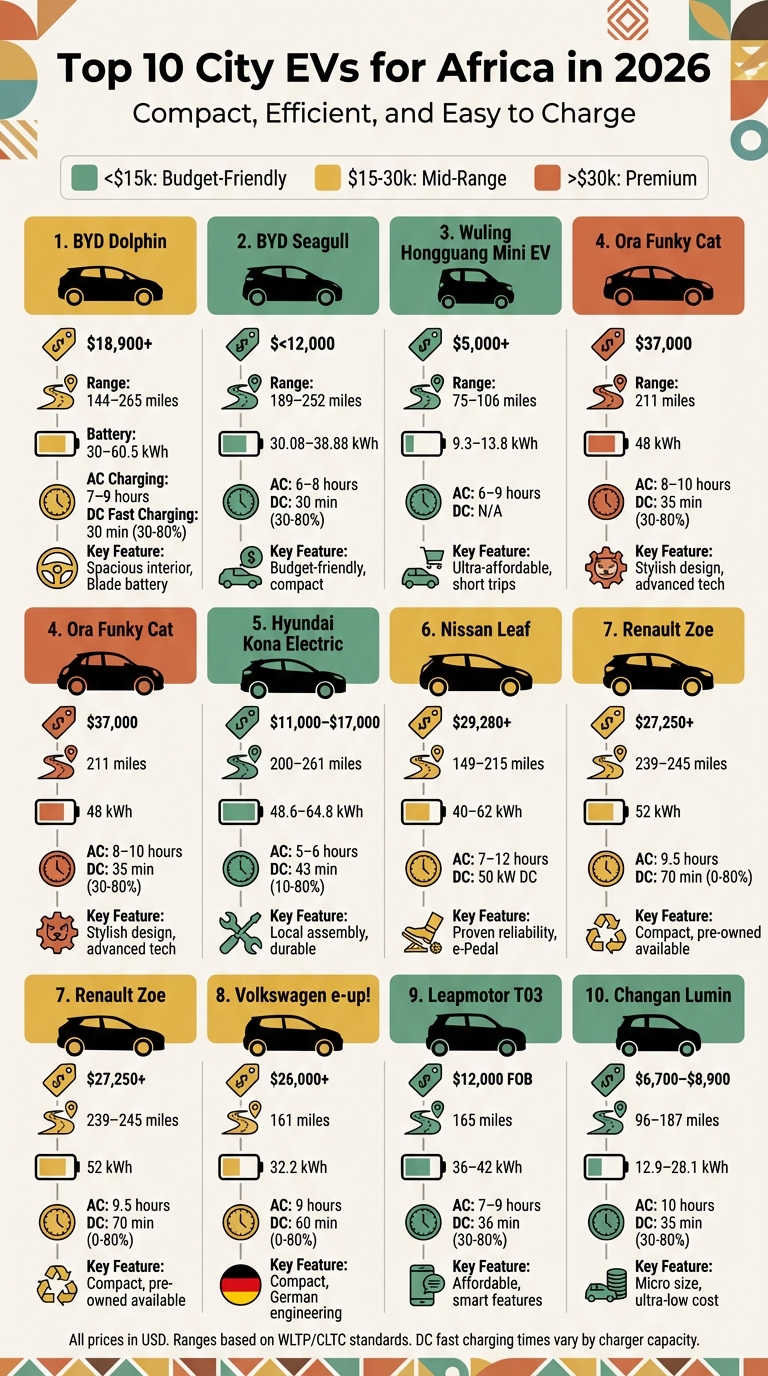
Cities in Africa face unique challenges like traffic congestion, limited parking, and unreliable power supply. Compact electric vehicles (EVs) are emerging as a practical solution, offering small sizes, energy efficiency, and easy charging options. Here’s a quick look at the top 10 city EVs for 2026, designed to handle the demands of urban life in African cities:
- BYD Dolphin: Compact size, 144–265 miles range, priced from $18,900.
- BYD Seagull: Budget-friendly, 189–252 miles range, priced below $12,000.
- Wuling Hongguang Mini EV: Ultra-affordable, 75–106 miles range, starting at $5,000.
- Ora Funky Cat: Stylish design, 211 miles range, priced around $37,000.
- Hyundai Kona Electric: SUV option, 200–261 miles range, priced $11,000–$17,000 in Nigeria.
- Nissan Leaf (Second Gen): Proven reliability, 149–215 miles range, priced from $29,280.
- Renault Zoe: Agile and efficient, 239–245 miles range, available pre-owned.
- Volkswagen e-up!: Compact and efficient, 161 miles range, priced $26,000–$33,000.
- Leapmotor T03: Affordable and practical, 165 miles range, priced at $12,000 FOB.
- Changan Lumin: Micro EV, 96–187 miles range, priced $6,700–$8,900.
These EVs prioritize affordability, practicality, and flexible charging, making them ideal for African cities where space and resources are limited. Below is a comparison of their key specifications.
Quick Comparison
| Vehicle | Price (USD) | Range (miles) | Battery (kWh) | Charging (AC/DC) | Key Features |
|---|---|---|---|---|---|
| BYD Dolphin | $18,900+ | 144–265 | 30–60.5 | 7–9 hrs / 30 mins | Spacious, reliable, Blade battery |
| BYD Seagull | <$12,000 | 189–252 | 30.08–38.88 | 6–8 hrs / 30 mins | Compact, budget-friendly |
| Wuling Hongguang Mini EV | $5,000+ | 75–106 | 9.3–13.8 | 6–9 hrs / N/A | Ultra-affordable, great for short trips |
| Ora Funky Cat | $37,000 | 211 | 48 | 8–10 hrs / 35 mins | Stylish design, advanced tech |
| Hyundai Kona Electric | $11,000–$17,000 | 200–261 | 48.6–64.8 | 5–6 hrs / 43 mins | Local assembly, durable |
| Nissan Leaf | $29,280+ | 149–215 | 40–62 | 7–12 hrs / 50 kW DC | Proven reliability, e-Pedal feature |
| Renault Zoe | $27,250+ | 239–245 | 52 | 9.5 hrs / 70 mins | Compact, pre-owned availability |
| Volkswagen e-up! | $26,000+ | 161 | 32.2 | 9 hrs / 60 mins | Compact, precision engineering |
| Leapmotor T03 | $12,000 FOB | 165 | 36–42 | 7–9 hrs / 36 mins | Affordable, smart features |
| Changan Lumin | $6,700–$8,900 | 96–187 | 12.9–28.1 | 10 hrs / 35 mins | Micro size, ultra-low cost |
These EVs offer practical solutions to urban mobility issues in Africa, balancing affordability, efficiency, and ease of use for city drivers.
Top 10 City EVs for Africa 2026: Price, Range & Charging Comparison
Chinese EVs You Can Buy in Kenya – Africa EV Show
1. BYD Dolphin
The BYD Dolphin is a compact hatchback designed with city life in mind. Measuring about 13.1 feet in length, it’s perfect for navigating narrow streets and squeezing into tight parking spots – ideal for bustling urban environments in Africa. As part of BYD’s "Ocean Series", this car focuses on being a reliable option for daily commuting rather than long road trips. Let’s dive into its design, efficiency, charging capabilities, and affordability.
Compact Design for Urban Convenience
At 13.1 feet long, the Dolphin strikes a balance between being small enough for city driving and roomy enough for everyday needs. Despite its compact exterior, the interior feels surprisingly spacious, offering a 316-liter trunk that expands to 1,037 liters with the rear seats folded. Whether it’s a grocery run, a trip to the market, or a weekend getaway, the Dolphin has you covered.
Energy Efficiency for City Driving
The Dolphin’s 8-in-1 electric powertrain is built to maximize efficiency, especially in stop-and-go traffic. It accelerates from 0 to 62 mph in 11.1 seconds, which is more than adequate for urban driving. As Paul Horrell from Top Gear puts it, "This modest performance bolsters its efficiency." The car is powered by a Lithium Iron Phosphate (LFP) "Blade Battery", which supports full charges and deep discharges with minimal wear, ensuring reliability for daily commutes.
Charging Made Simple
Charging the Dolphin is straightforward, whether at home or on the go. It comes with a 7kW home wall charger, allowing you to recharge overnight using standard household AC power – key for areas with inconsistent electricity supply. Higher trims, like the Dolphin Surf Dynamic, also support DC fast charging. With a 40kW fast charger, you can go from 10% to 80% battery in about 30 minutes. Plus, the car features V2L (Vehicle-to-Load) technology, letting it act as a mobile power source during outages. BYD is actively working with Eskom to expand public charging stations in South Africa, focusing on high-traffic locations such as malls and hospitals.
Budget-Friendly Options for African Buyers
The Dolphin is priced to appeal to middle-class urban commuters looking to switch from gas-powered cars. In South Africa, the entry-level Dolphin Surf Comfort starts at R339,000 ($18,900) and comes with a 30kWh battery offering a 144-mile range. The Dolphin Surf Dynamic, priced at R389,900 ($21,700), includes a 38.8kWh battery and a 183-mile range. For those seeking extended range, higher-spec models range from R539,900 to R599,900 ($30,100 to $33,400) and can go up to 265 miles on a single charge. These options make the Dolphin an appealing choice for those transitioning to electric vehicles without breaking the bank.
2. BYD Seagull
The BYD Seagull is BYD’s smallest model, designed with bustling city life in mind. Measuring just 12.4 feet in length (3,780 mm in its standard form), this compact car made a big splash in China, racking up 10,000 orders within its first 24 hours on the market. By the end of 2023, just seven months after its release, production hit 200,000 units. In Indonesia, where it’s sold as the Atto 1, it became the best-selling car by late 2025, with over 18,000 units sold. Its success lies in its thoughtful design, which balances size, efficiency, and practicality.
Built for Tight Spaces and Busy Streets
The Seagull’s compact design is tailor-made for navigating crowded urban environments. With a length of 12.4 feet, a turning radius of 16.2 feet, and a wheelbase-to-length ratio of 66%, parking and maneuvering through tight spaces becomes a breeze. Despite its small footprint, the car offers a surprisingly roomy interior, thanks to its clever layout. Its 5-door hatchback design ensures easy access for passengers, while the use of 61% high-strength steel in its construction provides a reassuring level of safety.
Efficient Performance for City Driving
The Seagull shines in urban settings, where stop-and-go traffic is the norm. Its energy consumption is impressively low, using just 9.6–9.86 kWh per 62 miles under CLTC testing. For quick acceleration in city traffic, it can go from 0 to 31 mph in just 4.9 seconds. The car also features regenerative braking, which recaptures energy every time you stop, and a smart temperature control system that helps maintain battery efficiency. Buyers can choose between two LFP Blade Battery options: a 30.08 kWh version offering a range of 189 miles, or a 38.88 kWh version with a range of up to 252 miles (305 to 405 km CLTC). This range is more than enough for daily city commutes without the need for constant recharging.
Convenient Charging Options
Charging the Seagull is simple and versatile. It supports 6.6 kW AC charging for home setups and 30–40 kW DC fast charging for quicker top-ups. With a DC fast charger, you can charge the battery from 30% to 80% in just 30 minutes. The car also features scheduled charging, allowing you to take advantage of off-peak electricity rates, and a VTOL system to power essential appliances during outages – an especially handy feature in areas with unreliable power grids.
A Budget-Friendly Option for African Markets
Affordability is one of the Seagull’s strongest selling points. In China, it’s priced below $12,000, while in Brazil, it costs between $20,000 and $23,000. In South Africa, where it launched as the Dolphin Surf on September 16, 2025, two versions are available: the Comfort model with a 30 kWh battery and the Dynamic model with a 38.8 kWh battery. Safety is another major draw. The European version earned a five-star Euro NCAP safety rating in 2025, scoring 82% for adult occupant protection and 86% for child safety. Experts have praised the Seagull for delivering quality and safety without feeling like a budget car, making it a compelling option for cost-conscious buyers in Africa seeking both reliability and value.
3. Wuling Hongguang Mini EV
The Wuling Hongguang Mini EV is a budget-friendly electric vehicle designed for bustling urban areas. Measuring just 9.6 feet (2,920 mm) in length and weighing 1,543 lbs (700 kg), this compact four-seater has become a hit in China, offering a practical alternative for city transportation. With a starting price of around $5,000, it provides a safer and more secure option than the scooters and motorbikes many African commuters currently rely on. Its affordability and compact design make it an ideal choice for city dwellers.
Perfect for Crowded Streets and Tight Parking
The Mini EV’s small size is a game-changer for navigating congested city streets. Its slim profile and compact wheels allow for easy maneuvering in traffic, while the interior design ensures ample headroom despite its size. The 2025 model, equipped with four doors and a 6.6-foot (2-meter) wheelbase, is tailored to make parking and handling in cramped spaces a breeze.
Efficient for Stop-and-Go Traffic
This vehicle isn’t just small – it’s built for efficiency. Its lightweight construction means it uses less energy to accelerate, which is especially useful in stop-and-go city traffic. Powered by a 20 kW (27 hp) motor, the Mini EV also features regenerative braking to improve energy use. Buyers can choose between two battery options: a 9.3 kWh battery with a range of 75 miles (120 km) or a 13.8 kWh battery offering up to 106 miles (170 km). Both are more than enough for daily urban commutes.
Convenient Charging Options
Charging the Mini EV is straightforward, as it uses standard 220V household outlets. A full charge takes between 6.5 and 9 hours, making it compatible with the growing urban charging networks in cities like Nairobi, Lagos, and Johannesburg.
A Cost-Effective Option for Africa
Affordability is one of the Mini EV’s standout features. Base models start at approximately $5,000, while premium versions, such as the "Macaron" edition with extra features, cost up to $6,645 – far less than many other electric vehicles, like the Nissan Leaf.
Tu Le, Founder and Managing Director of Sino Auto Insights, remarked, "The Mini EV has appealed to younger buyers in China, and [GM] could target a similar demographic in the US, or in an emerging market, where a small city car would appeal".
WIRED noted, "As a cheap introduction to electric family motoring, the car is infinitely safer and better than a scooter or motorbike".
For African consumers looking to transition to electric vehicles, the Wuling Hongguang Mini EV offers an affordable, efficient, and practical choice for urban living.
4. Ora Funky Cat
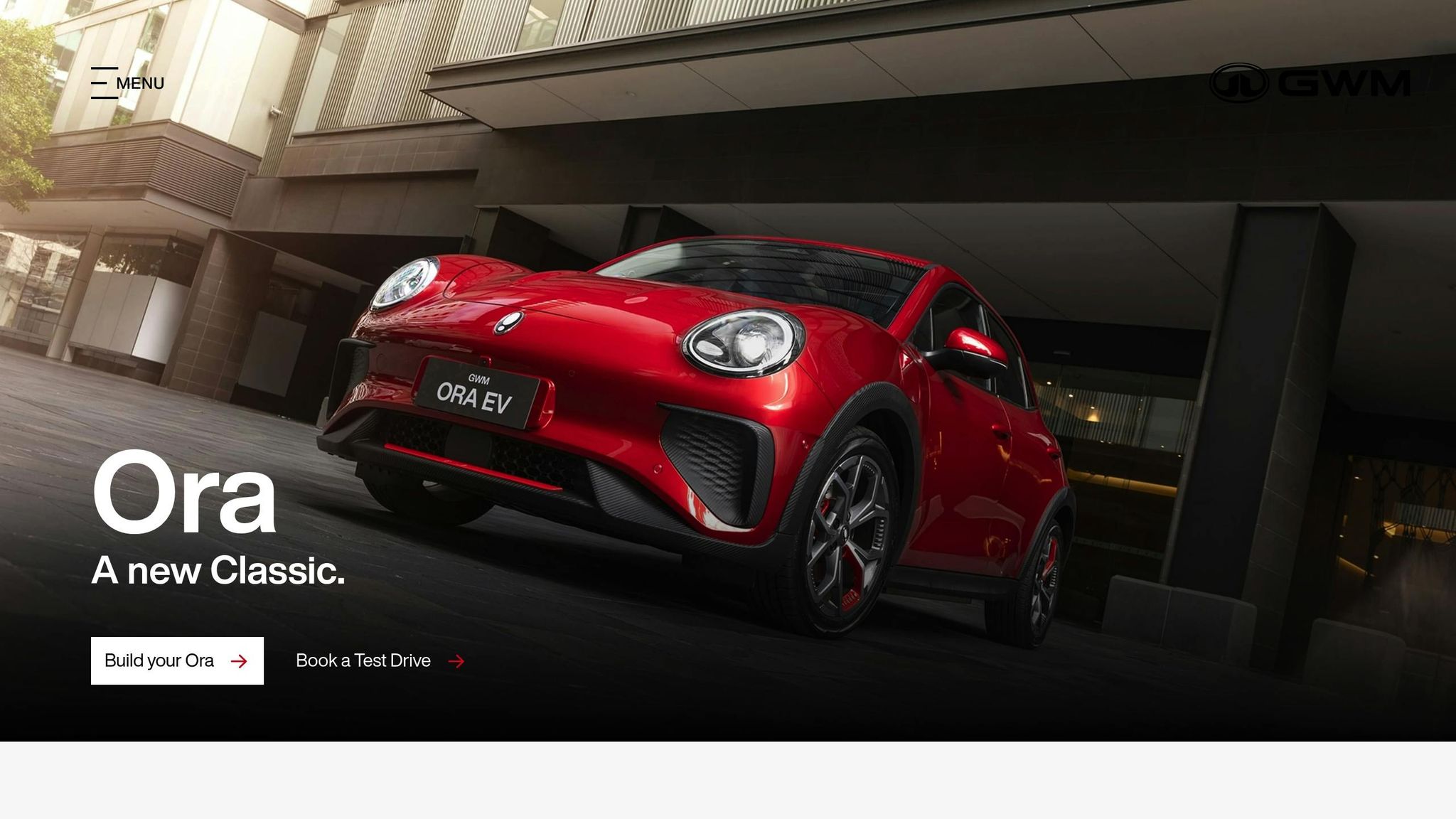
The Ora Funky Cat – known as the GWM Ora in some African markets – brings a fresh approach to urban driving with its eye-catching design and practical features. Measuring 166.7 inches long and 71.9 inches wide, this compact hatchback from Great Wall Motors offers a smart blend of style and utility, perfect for navigating the busy streets of African cities. At its South African debut, it was priced at R716,900 (around $37,000) and boasted a 211-mile (340 km) range, making it an appealing and reasonably priced choice for buyers. Let’s take a closer look at what makes this car stand out.
Compact Size for City Living
The Ora Funky Cat’s small size is tailor-made for crowded urban environments. With a ground clearance of 5.3 inches, it handles speed bumps and uneven roads with ease. Adding to its urban-friendly design is a high-tech 360-degree camera system, which includes a "clear floor" function to help drivers spot obstacles directly underneath the car. This feature is particularly handy for parking in tight spaces or navigating through bustling market areas. Despite its compact exterior, the interior feels roomy, offering plenty of legroom and headroom for passengers.
Efficiency in Stop-and-Go Traffic
When it comes to energy use, the Funky Cat is built for city driving. It achieves 3.7–3.8 miles per kWh, making it a great choice for stop-and-go traffic. The car is powered by a 48 kWh battery and features adjustable regenerative braking to maximize energy recovery. Plus, the convenience of a smartphone app for pre-cooling the cabin ensures efficiency without compromising comfort.
Flexible Charging Options
Charging the Ora Funky Cat is straightforward and versatile. It comes equipped with a Type 2/CCS port, allowing it to charge to 80% in just 43–48 minutes using a 64 kW DC charger. On a 7 kW AC supply, a full charge takes approximately 5 hours and 24 minutes. This flexibility makes it well-suited for cities like Johannesburg and Cape Town, where charging infrastructure is expanding rapidly.
Remeredzai Joseph Kuhudzai of CleanTechnica remarked, "The Ora Cat will be a game changer in a market that is starved of more affordable BEVs, given its range of about 390 km in combined city/highway driving".
As a final highlight, the Funky Cat earned a 5-star Euro NCAP safety rating, with an impressive 93% score for its safety assist features. This makes it a reliable choice for families in urban settings. Additionally, South African dealerships often serve neighboring countries like Zimbabwe, suggesting the car’s appeal could extend across the region.
5. Hyundai Kona Electric

The Hyundai Kona Electric offers a smart solution for city drivers in Africa, combining a dependable driving range with the convenience of local support. This compact SUV comes with two battery options: a 48.6 kWh standard range and a 64.8 kWh long-range version. This gives buyers the flexibility to choose based on their daily driving needs and budget. Locally assembled in Nigeria, the Kona Electric is priced between ₦18 million and ₦28 million (approximately $11,000–$17,000), making it a budget-friendly choice for urban commuters.
Built for City Streets and Tight Spaces
With a turning diameter of just 34.8 feet and a ground clearance of 5.9 inches, the Kona Electric is well-suited for navigating crowded city streets and cramped parking spots. Whether you’re maneuvering through Lagos’s bustling markets or weaving through Nairobi’s narrow lanes, its compact design makes urban driving less stressful.
Efficient Performance in Stop-and-Go Traffic
The Kona Electric shines in city traffic, thanks to its regenerative braking system that recaptures energy during frequent stops. The long-range version offers up to 261 miles (420 km) on a full charge, while the standard range delivers 200 miles (322 km). This extended range means fewer charging stops, which is especially handy in areas where public charging networks are still growing.
Flexible Charging Options for Urban Drivers
Charging the Kona Electric is straightforward and adaptable to different setups. The 11 kW onboard charger can fully recharge the 48.6 kWh battery in about 5 hours, while the 64.8 kWh version takes roughly 6 hours. For quicker turnarounds, a 100 kW DC fast charger can take the battery from 10% to 80% in just 43 minutes. Plus, the Vehicle-to-Load (V2L) feature allows the car to power external devices – an invaluable tool during power outages. Many owners are even pairing their Kona Electric with rooftop solar panels and battery storage systems to counter unreliable electricity grids.
Affordable and Backed by Local Support
Affordability and strong local support make the Kona Electric a practical choice for African markets. Thanks to local assembly by Nigeria’s Stallion Group, costs are kept in check, while reliable service and readily available parts enhance its long-term value. This solid after-sales support eases concerns about maintenance, making the Kona Electric not just a car, but a reliable partner for urban living.
6. Nissan Leaf (Second Generation)

The Nissan Leaf (Second Generation) combines urban-friendly practicality with affordability, offering a base MSRP of $29,280 for the S model and $37,330 for the SV Plus. It comes with two battery options: a standard 40 kWh battery providing an EPA-estimated range of 149 miles and a larger 62 kWh battery that extends the range to 215 miles. These options make it a solid choice for daily city driving. Let’s dive into what makes this compact EV a standout for urban life.
Perfect Fit for Tight City Spaces
With a length of 176.4 inches and a width of 70.5 inches, the Leaf is designed to navigate crowded streets and snug parking spots with ease. Features like the "Invisible Hood View" and a 360-degree camera system take the stress out of maneuvering in confined spaces. On the practicality front, it offers impressive cargo space – enough to fit 7 suitcases behind the rear seat, which expands to hold 19 when the seats are folded down.
Optimized for Urban Energy Efficiency
The Leaf shines in stop-and-go city traffic, delivering an EPA-rated 114 MPGe in urban conditions, compared to 94 MPGe on highways. Its e-Pedal system is a game-changer, allowing drivers to use regenerative braking simply by easing off the accelerator. This feature not only improves efficiency but also makes driving in heavy traffic smoother. Plus, the Leaf’s instant power delivery ensures quick acceleration, ideal for navigating city streets.
Charging Made Simple and Convenient
Charging the 2026 Leaf is straightforward, thanks to its dual-port system – J1772 for AC charging and NACS for DC fast charging. The included portable cable works with both 120V and 240V outlets, allowing a full recharge in about 7 hours on a 240V connection. DC fast charging, while capped at 50 kW, is supported by CCS adapters provided by Nissan, ensuring compatibility with a wide range of public charging stations. The MyNISSAN app adds convenience by helping drivers locate charging stations and monitor their battery status.
One standout feature is the Leaf’s Vehicle-to-Load (V2L) capability, which can supply up to 1,500 watts via AC outlets. This is especially useful during power outages or in areas where blackouts are common, making it more than just a car – it’s a potential backup power source.
sbb-itb-99e19e3
7. Renault Zoe
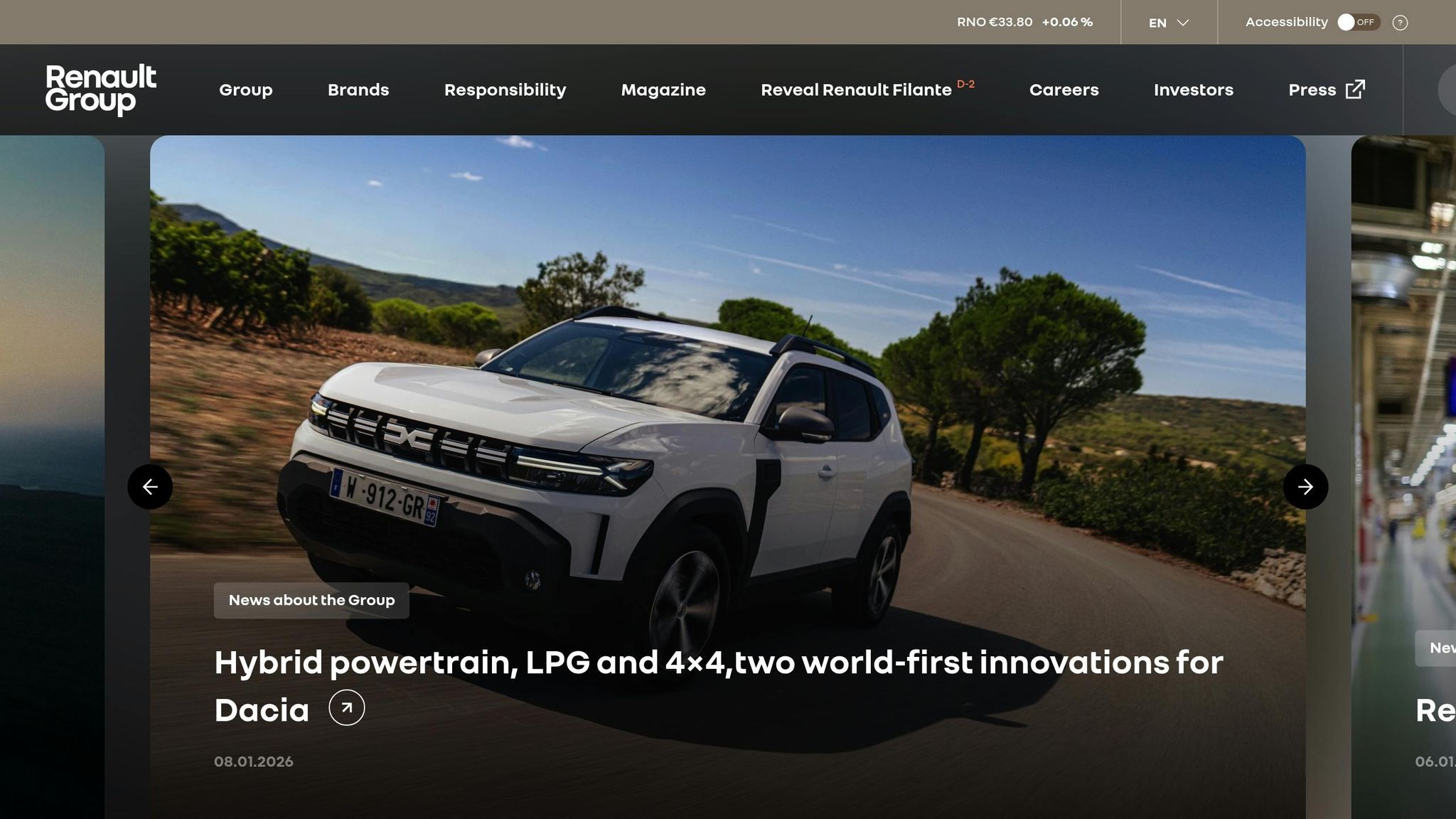
The Renault Zoe is a compact electric vehicle designed for navigating the challenges of city life, making it a practical choice for urban areas across Africa. Built on the same platform as the Renault Clio, this five-door hatchback is tailored for maneuverability and efficiency, making it a strong contender for city drivers.
Designed for Crowded Streets and Tight Parking
With a length of 160.8 inches and a width of 68.1 inches, the Zoe is compact enough to handle narrow city streets and tight parking spots effortlessly. Its 101.9-inch wheelbase optimizes stability and handling, while the five-door design ensures easy access for passengers, even in confined urban spaces.
Energy Efficiency in City Traffic
The Zoe is powered by a synchronous electric motor, available in outputs between 66 kW and 100 kW, delivering smooth and efficient performance in stop-and-go city traffic. Weighing just 1,468 kg, it’s light enough to conserve energy during frequent starts and stops. Its ZE 50 battery, with a 52 kWh capacity, offers a WLTP range of 239–245 miles, making it well-suited for daily commutes.
Flexible Charging Options
One of the Zoe’s standout features is its Chameleon onboard charger, which supports AC charging at levels up to 22 kW through Type 2 connectors. This is a major advantage in regions where DC fast chargers are scarce, allowing the Zoe to charge faster than many other EVs that max out at 7 kW or 11 kW on AC. The system cleverly uses the car’s motor electronics for charging, reducing both weight and complexity. Additionally, newer models are equipped with DC charging capabilities of up to 50 kW via CCS2 connectors, adding even more flexibility.
Affordable and Accessible for African Drivers
The Renault Zoe’s availability in the pre-owned market makes it an attractive and cost-effective option for African urban drivers. With production ending in March 2024, the Zoe has become increasingly available as a pre-owned vehicle by 2026, offering a budget-friendly entry into electric vehicle ownership. When new, the Zoe’s pricing in Europe started at around €20,700 (approximately $27,250), and its widespread production means parts and service knowledge are readily available, keeping long-term ownership costs manageable.
8. Volkswagen e-up!
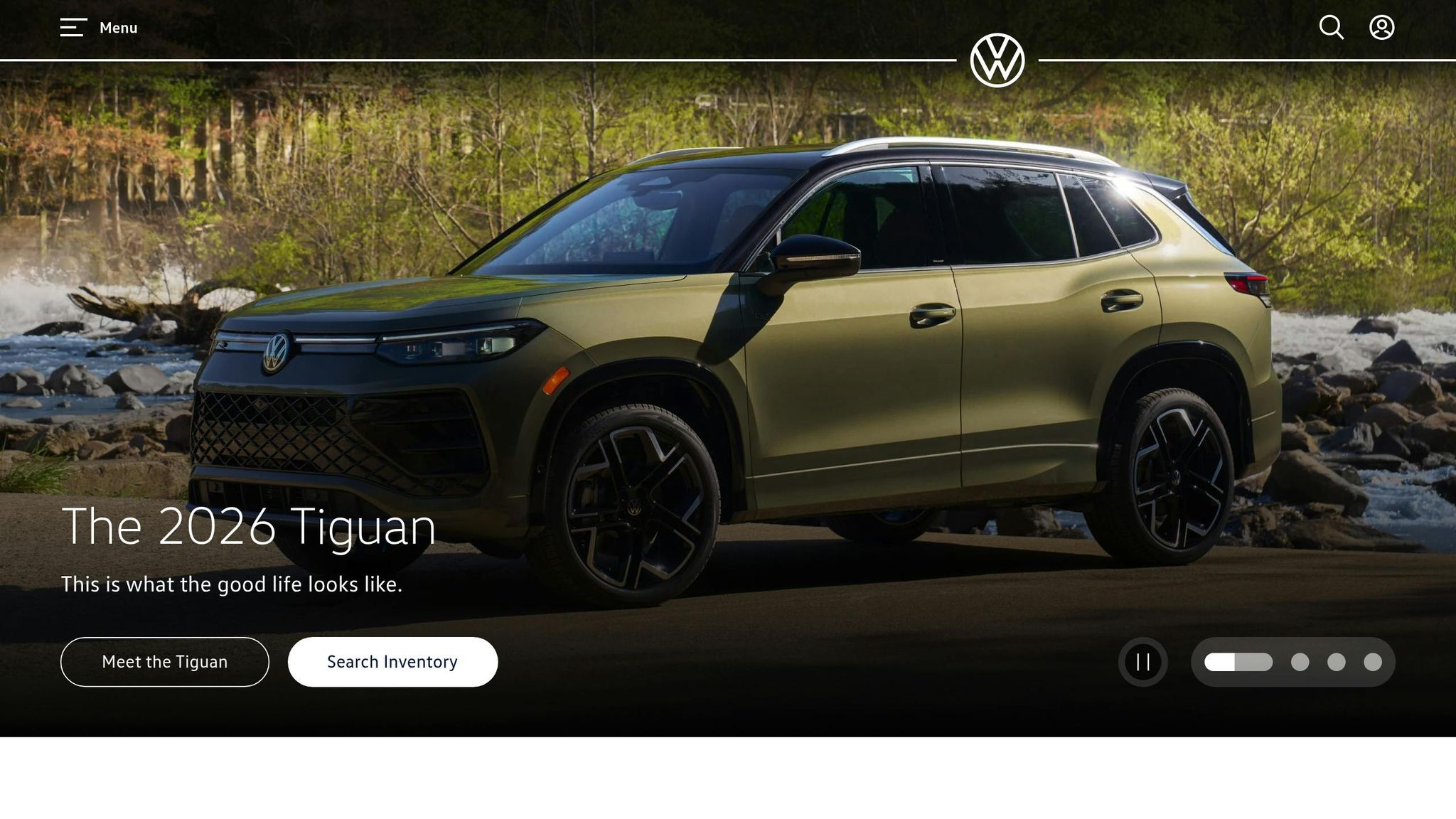
The Volkswagen e-up! is a compact electric vehicle (EV) tailored for urban living, combining the precision of German engineering with the demands of city life. Built on Volkswagen’s "New Small Family" platform, this A-segment vehicle is perfectly suited for high-density urban environments, making it an excellent choice for bustling African city centers.
Compact Design for Urban Navigation
Measuring just 141.7 inches in length and 64.8 inches in width, the e-up! is one of the smallest EVs on the market. Its 95.3-inch wheelbase allows for a tight turning radius, making it easy to navigate crowded streets and squeeze into parking spaces that larger cars can’t manage. To enhance safety in busy city conditions, the e-up! features Volkswagen’s "City Emergency Braking" system, which uses laser sensors to detect potential collisions at speeds under 19 mph. This compact design and safety technology have made the e-up! a hit in cities with space constraints, such as in Japan, where limited parking is a common challenge.
Energy Efficiency for Stop-and-Go Traffic
The e-up! is built to thrive in urban traffic, thanks to its energy-efficient design. It features a "B" (Brake) mode that maximizes regenerative braking, making stop-and-go driving smoother and more efficient. Its 32.2 kWh battery provides a WLTP-rated range of 161 miles, with over 120 miles achievable in typical urban conditions. Weighing around 2,722 pounds, the e-up! is light enough to conserve energy during frequent accelerations and decelerations. While capable of producing up to 82 horsepower, the motor usually operates at around 54 horsepower to prioritize efficiency during everyday use. Drivers can choose from three modes – Normal, Eco, and Eco Plus – with the Eco Plus setting limiting the top speed to 56 mph and adjusting air conditioning to stretch the battery range even further.
Flexible Charging Options
The e-up! supports both AC and DC charging, making it adaptable to various charging infrastructures. Across Africa, charging networks are expanding rapidly. For example, Morocco and Kenya are leading initiatives to increase public AC and DC charging availability . In Kenya, Kenya Power is installing 45 public chargers across six counties, helping reduce range anxiety for urban EV drivers. This growing infrastructure ensures that e-up! owners can rely on convenient AC charging for daily needs while benefiting from faster DC charging as it becomes more widespread in urban areas.
Accessible Pricing and Reliability
When it launched in 2020, the e-up! was priced between $26,000 and $33,000, depending on government incentives. Its accolades, including the 2012 World Car of the Year award and a 5-star safety rating, highlight its dependability. Additionally, its presence in South Africa, following the introduction of the petrol-powered Up! in 2015, ensures that parts and service are readily available in the region.
9. Leapmotor T03

The Leapmotor T03 is a compact electric vehicle (EV) from China, measuring 11.8 feet in length and 5.5 feet in width. Its boxy design is all about making the most of interior space, making it a great fit for navigating Africa’s narrow streets and tight parking spots. Let’s dive into what makes this EV stand out.
Designed for Crowded Streets and Limited Parking
The T03’s boxy shape isn’t just for looks – it’s built for practicality. The design improves forward visibility, making it easier to handle in tight spaces. Dan Jones, a Senior Reviewer at What Car?, highlights this feature:
"Thanks to the T03’s boxy shape, forward visibility is pretty good, with an easy view out over the small bonnet to make placing the car easy".
With three steering modes, rear parking sensors, and a rear-view camera, the T03 is well-equipped for urban driving. Plus, its high roofline ensures enough headroom for four to five passengers, so it doesn’t sacrifice comfort for compactness.
Energy Efficiency for City Driving
Weighing just 2,270 pounds (1,030 kg), the T03 is built for efficiency in stop-and-go traffic. Its 95-hp (70 kW) motor delivers a real-world efficiency of 4.0 miles per kWh, making it agile and cost-effective for urban use. Buyers can choose between two battery options – 36 kWh or 42 kWh – offering a WLTP range of up to 165 miles. Regular over-the-air (OTA) updates ensure the vehicle stays up-to-date with the latest features and improvements.
Quick and Convenient Charging
The T03 supports 50 kW DC fast charging, which means you can charge up to 80% in just 53 minutes. If starting from 30%, you’re looking at only 36 minutes under optimal conditions. This makes it a convenient option for drivers relying on public charging infrastructure.
Budget-Friendly for African Buyers
Priced at $12,000 FOB, the T03 delivers a lot of value for its price. It comes standard with safety features like lane-keeping assist and blind-spot monitoring, making it a secure choice for families and individuals alike. Additionally, support from Stellantis ensures access to service centers and spare parts, which is a big plus for long-term ownership. Reviewers have also noted its sturdy build, with doors that close with a "reassuring thud" – a small detail that adds to its overall appeal.
10. Changan Lumin
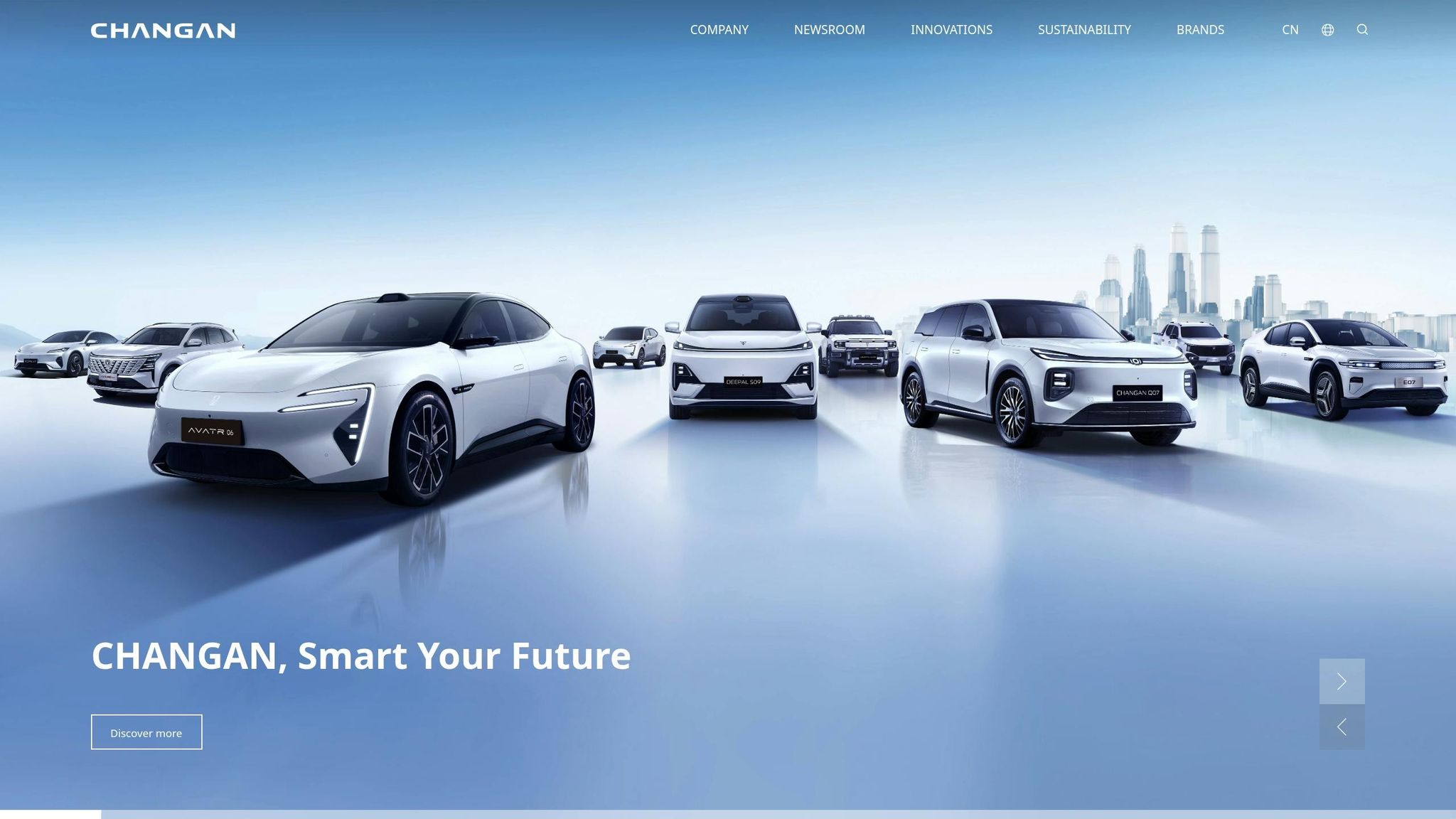
The Changan Lumin is a micro electric vehicle (EV) designed with urban living in mind. At just 10.7 feet long (3,270 mm) and 5.6 feet wide (1,700 mm), it’s perfect for navigating busy city streets and squeezing into tight parking spaces. Don’t let its compact, bubble-like design fool you – this little EV can seat four passengers and comes packed with modern features. Let’s break down why the Lumin is a great fit for urban African markets.
Built for Tight Spaces and City Streets
With a wheelbase of just 6.5 feet (1,980 mm), the Lumin is incredibly agile, making it a breeze to weave through narrow streets or crowded parking lots. Its large windows enhance visibility, which is a big plus in chaotic urban environments. As Auto Akhbar aptly describes it: "Ultra-compact size = ease in city, parking, tight spaces".
Energy Efficiency for Stop-and-Go Traffic
Weighing between 840 and 945 kg, the Lumin is designed to be energy-efficient, especially in urban settings where stop-and-go traffic is common. It features regenerative braking to recover energy during braking and an Eco mode to optimize performance. Powered by a 31–36 kW motor delivering 83 Nm of torque, it offers three battery options:
- 12.9 kWh for a 96-mile range
- 17.7 kWh for a 127-mile range
- 28.1 kWh for a 187-mile range
These ranges are based on CLTC standards.
Flexible Charging Options
The Lumin supports both AC and DC charging. Higher-spec models equipped with DC fast charging can recharge the battery from 30% to 80% in about 35 minutes, making it ideal for quick stops at public charging stations. Standard AC charging requires 10 to 10.5 hours for a full charge. If you’re considering this EV in African markets, double-check that your chosen model includes the DC fast-charging capability.
Budget-Friendly Pricing
In China, the Lumin’s base model with a 96-mile range starts at approximately $6,700, while the longer-range 187-mile version costs around $8,900. Compared to entry-level Western EVs, which often start at over $25,000, the Lumin offers incredible value. Even after factoring in export costs and duties, it remains an affordable option. Standard features include a 10.25-inch touchscreen with phone mirroring and voice control, dual front airbags, ABS, EBD, and a Tire Pressure Monitoring System.
Comparison Table
Below is a side-by-side comparison of key specifications – price, battery capacity, range, and charging times – for ten city EVs. This table provides a quick overview to help you evaluate each model’s features and suitability for urban environments.
| Vehicle | Price (USD) | Battery (kWh) | City Range (miles) | Energy Use (per 100 miles) | AC Charge Time | DC Fast Charging Time | Main Advantages for African Cities |
|---|---|---|---|---|---|---|---|
| BYD Dolphin | $14,000–$18,000 | 44.9–60.5 | 211–267 | 16.8–22.7 kWh | 7–9 hours | 30 min (30–80%) | Reliable blade battery, spacious interior, trusted performance |
| BYD Seagull | $9,700–$11,500 | 30.08–38.88 | 186–236 | 12.7–16.5 kWh | 6–8 hours | 30 min (30–80%) | Budget-friendly, compact design, excellent energy efficiency |
| Wuling Hongguang Mini EV | $4,500–$6,200 | 9.3–26.5 | 75–186 | 12.4–14.2 kWh | 6–9 hours | Not available | Affordable entry-level option, perfect for short trips, low maintenance |
| Ora Funky Cat | $18,000–$22,000 | 47.8–63.1 | 193–261 | 18.3–24.2 kWh | 8–10 hours | 35 min (30–80%) | Advanced tech, smooth ride, solid safety features |
| Hyundai Kona Electric | $33,000–$37,000 | 39.2–64 | 186–258 | 15.2–24.8 kWh | 9.5–11 hours | 47 min (10–80%) | Durable build, better ground clearance, strong brand support |
| Nissan Leaf (Second Generation) | $28,000–$35,000 | 40–62 | 149–226 | 17.7–27.4 kWh | 8–12 hours | 40–60 min (20–80%) | Extensive service network, proven reliability, convenient e-Pedal system |
| Renault Zoe | $25,000–$30,000 | 52 | 245 | 21.2 kWh | 9.5 hours | 70 min (0–80%) | Compact and agile, comfortable interior, ideal for city driving |
| Volkswagen e-up! | $26,000–$29,000 | 36.8 | 159 | 23.1 kWh | 9 hours | 60 min (0–80%) | Precision engineering, easy to navigate urban streets, well-crafted interior |
| Leapmotor T03 | $8,500–$10,500 | 31.9–41.3 | 186–249 | 12.8–16.6 kWh | 7–9 hours | 36 min (30–80%) | Affordable, smart features, efficient energy use |
| Changan Lumin | $6,700–$8,900 | 12.9–28.1 | 96–187 | 13.4–15.0 kWh | 10–10.5 hours | 35 min (30–80%) | Compact, four-seat capacity, ultra-low cost |
Note: DC fast charging adds approximately 2 km of range per minute, while AC charging provides about 0.3 km per minute.
Conclusion
Compact EVs are shaping up to be the most practical answer to urban mobility challenges in Africa by 2026. These ten models stand out for three key reasons: their small size makes them perfect for navigating congested city streets, their energy efficiency keeps operating costs low in stop-and-go traffic, and their smaller batteries make home, workplace, or solar-powered charging a viable option – eliminating the need for expensive fast chargers.
The market is evolving quickly to support this shift. Toyota plans to launch three fully electric models in South Africa by early 2026. Additionally, South Africa anticipates at least six more Chinese automakers entering the market that same year. Ghana is also making moves, actively engaging Chinese EV manufacturers to establish itself as a key assembly and distribution hub for West Africa. Meanwhile, infrastructure projects like LUG West Africa’s initiative to install 250 charging stations in Lagos are directly addressing urban challenges like grid instability and limited parking.
Chinese brands such as BYD, Leapmotor, and Changan are leading the way with affordable, durable designs featuring LFP batteries. These vehicles are proving to be a practical option for urban commuters, taxi operators, and delivery services. Ghana already has an estimated 17,000 EVs on its roads, while Morocco is emerging as a regional leader in EV adoption, thanks to a combination of policy incentives, charging infrastructure, and local manufacturing initiatives.
The benefits of compact EVs extend beyond convenience. They offer a chance to reduce urban pollution and noise while creating new opportunities in manufacturing, maintenance, and charging services. With tax incentives and local-assembly programs on the rise, the economic case for small city EVs is becoming even stronger. By 2026, platforms like EV24.africa will make the transition to compact EVs seamless – offering easy model comparisons, transparent pricing, and delivery across all 54 African countries.
FAQs
Why are compact EVs a great choice for African cities?
Compact electric vehicles (EVs) are a smart fit for African cities. Their small size makes it easier to weave through narrow streets and squeeze into tight parking spots. Plus, their lightweight build and compact batteries help keep costs down – some models are available for as little as $9,500. On top of that, they’re highly energy-efficient, offering longer ranges per charge. This is a big deal in areas where electricity might be expensive or not always reliable.
These EVs are designed to tackle the challenges of African urban life. They come equipped with heat-resistant batteries to handle soaring temperatures and reinforced suspensions to navigate bumpy roads. Thanks to their smaller battery packs, they charge quickly – typically in just 30 to 40 minutes using a fast charger. This makes them a practical option for cities with limited charging stations. Combining affordability, efficiency, and durability, compact EVs are a great solution for everyday urban commuting in Africa.
How do these EVs handle Africa’s unique power challenges?
The EVs designed for African cities prioritize charging solutions that align with the region’s power infrastructure. Many models come equipped with Level 2 home chargers, capable of fully charging a battery overnight (6–9 hours), even in areas where electricity supply can be inconsistent. Additionally, several vehicles offer fast DC charging options, allowing up to 80% battery charge in under an hour. Some models are even faster, reaching a full charge in just 30–40 minutes – perfect for quick recharges at work or public charging kiosks.
To address the continent’s growing reliance on solar energy, manufacturers are introducing solar-ready EVs. For instance, the Geely Geometry E can be paired with rooftop solar panels or portable solar chargers, enabling off-grid charging. Public charging networks are also expanding in major cities, featuring a mix of slow-charging stations for residential areas and rapid-charging hubs along busy routes. These developments make EVs a practical and efficient choice, even in regions with less-developed power systems.
What should I look for when choosing an electric vehicle for city driving in Africa?
When picking an EV for city driving in Africa, there are a few important things to keep in mind: price, size, range, and durability. For starters, compact models under 13 feet are perfect for squeezing through narrow streets and finding parking in crowded areas. A range of 200–250 miles is ideal, cutting down on the number of charging stops you’ll need. Pricing usually falls between $13,200 and $35,000, so it’s smart to decide on a budget early on.
Durability is another big factor. Look for EVs with 5–6 inches of ground clearance, sturdy suspensions, and heat-resistant batteries that can handle temperatures above 86°F. Since charging infrastructure is still growing, it’s a good idea to choose a model that supports home Level-2 charging. This type of setup can fully charge your vehicle in about 6–9 hours, but make sure you can install a home charger or have access to public charging stations nearby.
Also, take advantage of any government incentives like tax breaks to help lower the cost. Consider the reliability of your local power grid when deciding between fully electric vehicles (BEVs) and hybrids. BEVs work well in cities with charging networks, while plug-in hybrids (PHEVs) or hybrids (HEVs) might be a better fit in areas with fewer charging options. Lastly, a solid warranty and low maintenance needs can save you money in the long run.