
 Thabo Nkosi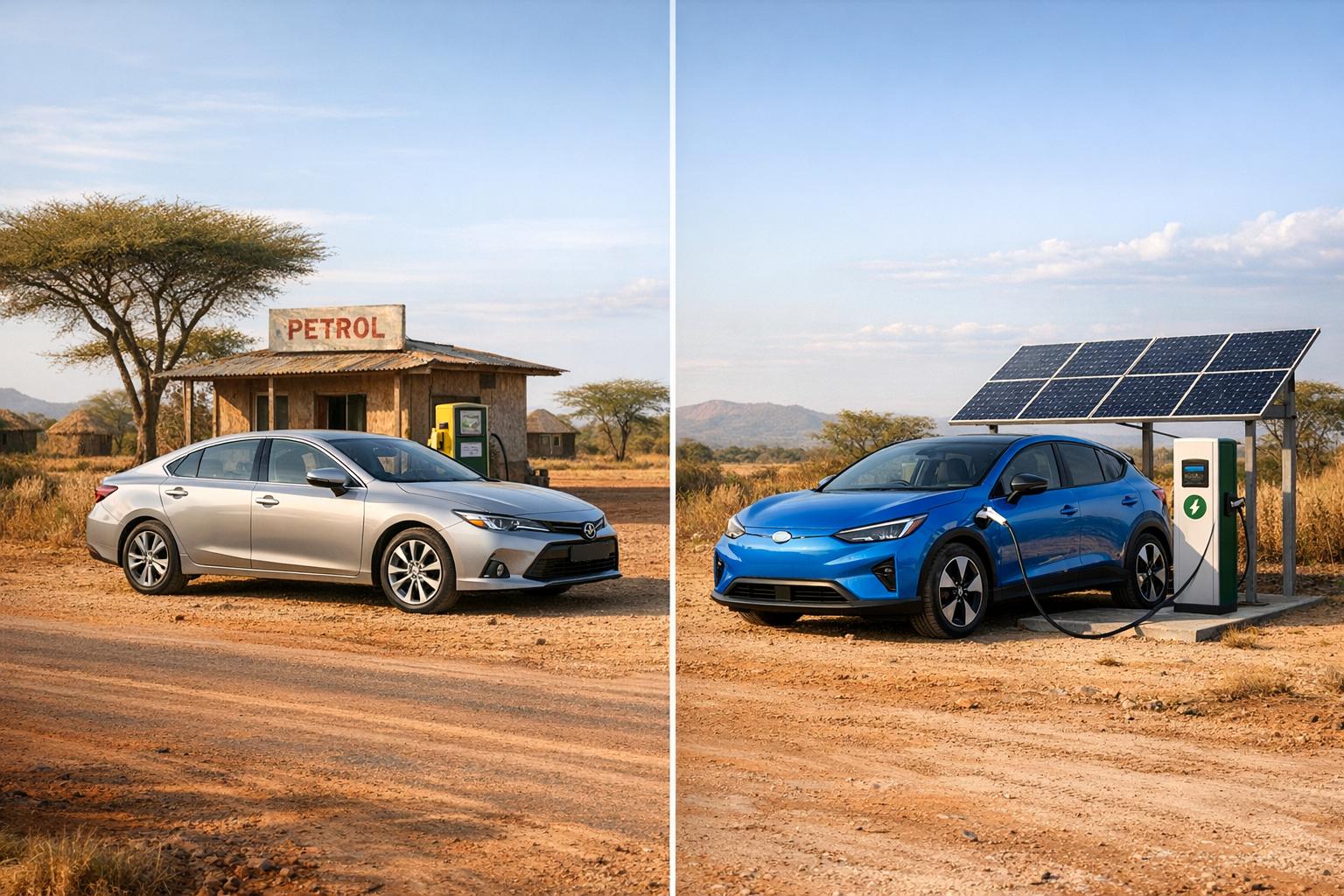
Africa’s shift to cleaner transportation faces unique challenges. Hybrids currently make more sense for most drivers due to their reliance on existing fuel stations and ability to function without charging infrastructure. EVs, while offering lower running costs and zero emissions, are limited by unreliable power grids and sparse charging networks in many areas.
Key Takeaways:
- Hybrids: Lower upfront costs, widely available fuel stations, and practical for long distances.
- EVs: Cheaper to run, zero tailpipe emissions, but require reliable electricity and charging access.
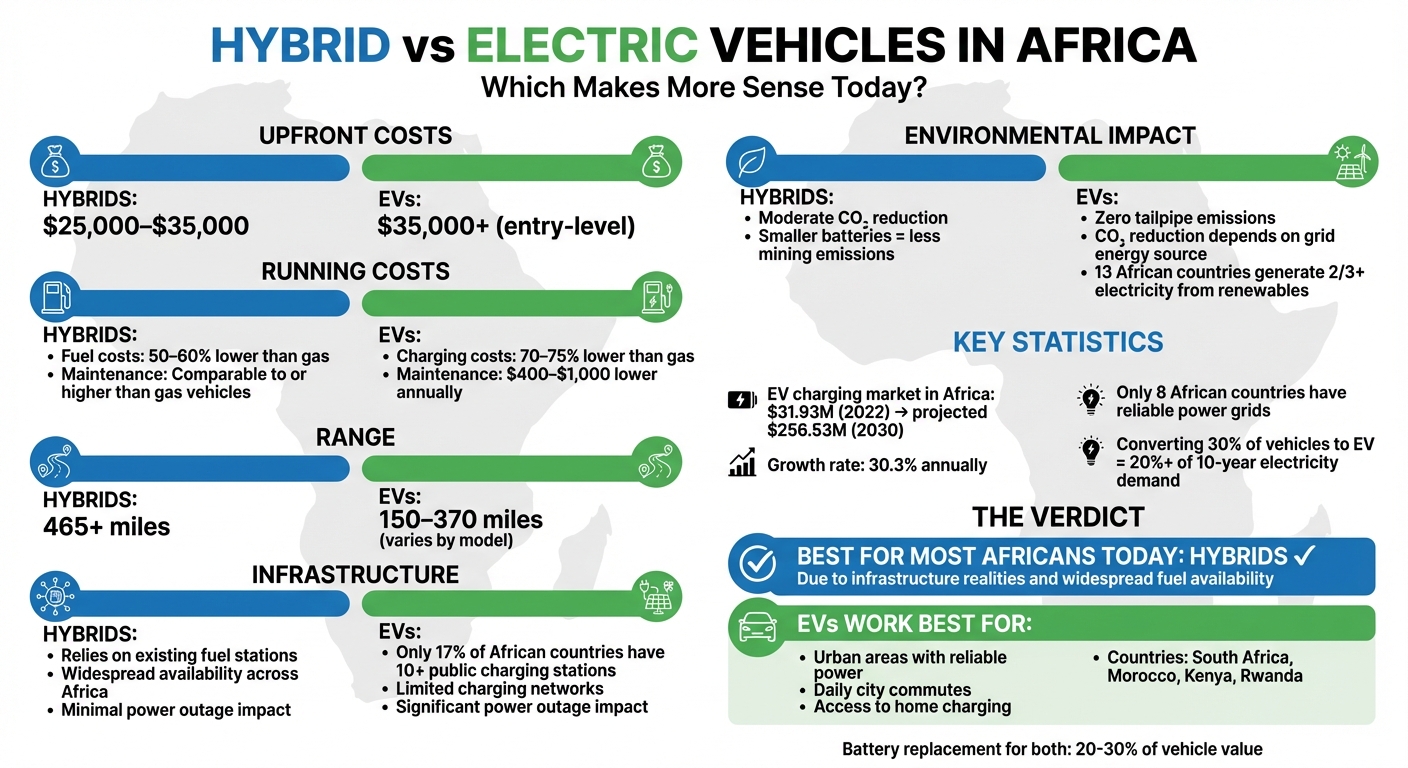
- Infrastructure: Only 17% of African countries have 10+ public EV charging stations, while fuel stations are widespread.
- Cost: EVs save $400–$1,000 annually on maintenance but have higher purchase prices compared to hybrids.
Quick Comparison:
| Feature | Hybrids | EVs |
|---|---|---|
| Upfront Cost | $25,000–$35,000 | $35,000+ |
| Fuel/Charging Costs | Higher than EVs | 70–75% lower than gas |
| Range | 465+ miles | 150–370 miles (varies by model) |
| Infrastructure | Relies on existing fuel stations | Limited charging networks |
| Power Outage Impact | Minimal | Significant |
For most African drivers, hybrids are the practical choice today, balancing fuel efficiency with the continent’s infrastructure realities. EVs may work better in urban areas with reliable power and charging options.
Hybrid vs Electric Vehicles in Africa: Complete Comparison Guide
Charging and Fuel Infrastructure in Africa
EV Charging Networks vs. Fuel Stations
Hybrid vehicles enjoy the convenience of an extensive fueling network, something EVs in Africa currently lack. Only 17% of African nations have 10 or more public charging stations, compared to the widespread presence of fuel stations, even in remote areas. South Africa and Morocco are leading the charge in developing EV infrastructure, but the majority of countries fall into the "Stragglers" category – offering minimal public charging options and grappling with unreliable power grids.
The numbers tell an interesting story. The Africa EV charging market was valued at $31.93 million in 2022, with projections suggesting it could grow to $256.53 million by 2030, reflecting a compound annual growth rate of 30.3%. Yet, this growth comes from a very small starting point. In contrast, fuel stations dominate with their established networks that don’t depend on grid electricity.
In Nairobi, for instance, ARC Ride, a local startup, operates around 80 battery-swapping cabinets for electric motorcycles. These stations ensure riders are never more than 2.5 miles (about 4 kilometers) from a location to swap batteries. Felix Saro-Wiwa, ARC Ride‘s Head of Growth, shared their vision:
"We want to reduce that down to two kilometers, so you’re really very close and have a sort of a similar density as you had to have with petrol."
This battery-swapping system offers a quick solution, with swaps taking less than five minutes. However, it’s currently limited to two-wheelers, leaving passenger EVs out of the equation. These gaps in infrastructure highlight the importance of stable power grids in supporting broader EV adoption across the continent.
Infrastructure Reliability and Access
Grid reliability is a critical factor in the EV vs. hybrid debate. Only eight African countries meet high standards for power grid reliability, making hybrids a more practical choice for now. Even in South Africa, which boasts relatively advanced infrastructure, load shedding – scheduled power outages – is a common occurrence. When the grid goes down, EV charging stations are rendered useless, while fuel stations can rely on backup generators to stay operational.
The challenge becomes even clearer when you consider the energy demands of EV adoption. For example, converting just 30% of vehicles to electric would require more than 20% of a country’s ten-year electricity demand growth. In Ethiopia, where internal combustion engine imports were briefly banned in early 2024, only half the population has access to electricity. Without major investments in infrastructure, widespread EV adoption in such areas remains a steep hill to climb.
Hybrids, on the other hand, bypass these grid-related hurdles. They can refuel at existing fuel stations and generate additional electricity through regenerative braking. In a region where fuel stations vastly outnumber EV charging points, this makes hybrids a practical and accessible alternative for many drivers.
Cost Comparison: Purchase Price and Ownership Expenses
Purchase Price and Import Duties
When it comes to upfront costs, hybrids generally come out ahead. Take the Honda Insight, for example, which is priced between $25,000 and $35,000. On the other hand, entry-level EVs like the Chevy Bolt start in the mid-$30,000 range, with long-range models (offering over 300 miles per charge) exceeding $60,000.
The situation becomes more complex when factoring in import duties, especially in African markets. For instance, as of 2021, the Democratic Republic of the Congo had a vehicle price index of 155.7, meaning cars there cost about 55.7% more than the global average. In contrast, South Africa’s index of 74.98 indicates vehicles are approximately 25% cheaper than the global norm. Other countries, such as Ghana (142.98), Egypt (119.9), and Nigeria (105.57), also experience significant price hikes due to taxes and fees, potentially adding thousands to the final cost. These disparities highlight the broader challenges tied to infrastructure and affordability. That said, EVs often qualify for more government incentives and rebates than hybrids, which can help offset their higher initial price.
Maintenance and Running Costs
When it comes to long-term maintenance, EVs have a clear advantage. They save owners between $400 and $1,000 annually since they don’t require oil changes, spark plugs, or emissions testing. Hybrids, on the other hand, combine traditional engine maintenance with the added upkeep of their electric components, alongside higher fuel costs. Meanwhile, EVs benefit from charging costs that are 70–75% lower than fuel expenses.
For example, charging a Tesla using grid electricity might cost about 4 to 5 cents per mile, whereas an efficient plug-in hybrid costs around 6 to 8 cents per mile. While hybrids like the Toyota Corolla Hybrid and Prius deliver impressive fuel efficiency – averaging about 4.5 L/100 km (52 mpg) – they still rely on regular fuel purchases. Additionally, battery replacement is a shared concern for both vehicle types, with costs ranging between 20% and 30% of the car’s total value. This makes warranty coverage especially important, particularly for used vehicles where battery health can significantly affect pricing.
5-Year Ownership Cost Comparison
Looking at a five-year ownership period reveals a clearer picture of overall value. While EVs may have steeper upfront costs, their lower operating expenses can lead to significant savings over time. Hybrids, by contrast, balance lower purchase prices with higher running costs for fuel and maintenance.
| Cost Category | Hybrid (e.g., Honda Insight) | Electric Vehicle (e.g., Chevy Bolt) |
|---|---|---|
| Purchase Price | $25,000 – $35,000 | $35,000+ (entry-level) |
| Annual Fuel/Charging | 50–60% lower than gas | 70–75% lower than gas |
| Annual Maintenance | Comparable to or higher than gas vehicles | $400–$1,000 lower than gas vehicles |
| Incentives/Rebates | Fewer or none available | Greater eligibility for tax credits |
| Battery Replacement Risk | 20–30% of vehicle value | 20–30% of vehicle value |
For those with access to reliable electricity and the ability to charge at home – possibly using solar panels with costs ranging from $0.05 to $0.11 per kWh – EVs become even more cost-effective over time. Public charging stations, though pricier, still offer competitive rates, typically between $0.28 and $0.69 per kWh. However, in areas with unreliable power grids or limited charging infrastructure, hybrids hold a practical edge due to the widespread availability of fuel. This breakdown of costs provides a solid foundation for examining how these vehicles perform under real-world driving conditions in Africa.
Performance in African Driving Conditions
Range and Driving Performance
When it comes to long-distance travel, the range differences between hybrids and EVs are hard to ignore. Take electric minibuses, for instance – they deliver just 21% of the range offered by their diesel counterparts. High-end EVs like the Tesla Model S can manage up to 370 miles on a full charge, but more mainstream options, such as the Nissan Leaf, average around 150 miles. While that might work for city commutes, it becomes a real challenge for intercity travel.
Refueling is another area where diesel vehicles have the upper hand. They can refuel in about a minute and cover 465 miles, whereas EVs charging at fast stations typically add only 1.2 miles per minute. Some electric minibuses charge even slower, at just 0.2 miles per minute. Fully recharging an EV can take up to 30 minutes at a fast charger, and frequent use of fast charging can shorten the battery’s lifespan. Hybrids, on the other hand, sidestep these issues entirely. They seamlessly switch between electric and gasoline power, making them ideal for stop-and-go traffic while offering the freedom to travel long distances without worrying about charging. These distinctions in range and refueling become even more critical when factoring in power outages and tough road conditions.
Handling Power Outages and Road Conditions
In sub-Saharan Africa, only about half the population has access to the electrical grid, and countries like South Africa experience regular load shedding that disrupts EV charging. Even in Kenya, where electrification rates reach 75%, the infrastructure for charging EVs remains a significant hurdle. These challenges highlight a key advantage of hybrids: they rely on the well-established fuel station network and aren’t tied to the grid.
"A plug-in lets you dabble in recharging… still carrying along that internal-combustion safety net for longer journeys or times when you just can’t find somewhere to plug in."
- David Gluckman, Contributing Editor, Car and Driver
Another consideration is road wear. Heavy EV battery packs can strain roads, making lighter vehicles like two- and three-wheelers a more practical choice in many African markets. For four-wheel vehicles, hybrids strike a balance by using smaller battery packs alongside gasoline engines. This setup offers electric efficiency in urban areas without the added weight of a full EV battery.
Use Case Comparison
Driving conditions across Africa vary widely, and the type of vehicle that performs best depends on the scenario. Here’s a breakdown:
| Driving Scenario | Hybrid Vehicles | Electric Vehicles (EVs) |
|---|---|---|
| Urban | Efficient in stop-start traffic; switches between gas and electric power | Excellent efficiency with zero tailpipe emissions; regenerative braking boosts performance |
| Highway | Extended range with no refueling worries; quick stops at gas stations | Limited by battery range; requires careful planning for charging stops |
| Rural Travel | Reliable, thanks to widespread fuel availability; independent of the grid | Difficult due to sparse charging points and unreliable electricity |
| Long-Distance Trips | Covers 465+ miles with fast refueling (about 1 minute) | Requires several charging stops, adding significant travel time |
| Power Outage Impact | Minimal; functions without grid reliance | Significant; charging becomes impossible during outages |
For fleet operators and frequent travelers, it’s clear: relying solely on EVs isn’t practical. A mix of electric and combustion-based engines is essential to ensure consistent transport of goods and passengers. EVs work best on fixed, predictable routes with centralized charging infrastructure, like Dakar’s electric bus networks. Meanwhile, hybrids excel in handling the unpredictable road conditions and infrastructure gaps that are common across much of Africa.
Environmental Impact and Government Policies
Emissions and Power Generation Sources
In Africa, the environmental benefits of electric vehicles (EVs) hinge heavily on the region’s energy sources. With over half of sub-Saharan Africa’s electricity coming from fossil fuels, charging an EV doesn’t automatically mean lower carbon emissions. In areas where coal and gas dominate the grid, the anticipated emissions reductions from EVs may not materialize as expected.
"The contribution of EVs to decarbonization is more complicated than just swapping them in for existing ICE vehicles, because their ultimate carbon footprint is determined by the source of their electricity."
- Jay Taneja, June Lukuyu, and Rebekah Shirley
That said, EVs shine when it comes to urban air quality. Without tailpipe emissions, they help reduce pollutants like particulate matter (PM2.5), which is linked to over 4 million deaths globally each year. For areas where fossil fuels still dominate, hybrids offer a more practical solution. They use smaller batteries – cutting down on mining and manufacturing emissions – and consume less fuel than traditional gas or diesel vehicles, making them a balanced choice for reducing emissions without full reliance on fossil-heavy grids.
Currently, only 13 African countries generate more than two-thirds of their electricity from renewable sources. In places like Zimbabwe, Mozambique, Ethiopia, and Kenya, where renewables play a larger role, EVs have the greatest potential to cut CO₂ emissions. However, for much of the continent, hybrids remain a more feasible way to lower fuel consumption while the grid transitions toward cleaner energy. These energy realities highlight the importance of government policies to accelerate the shift to cleaner transportation.
Government Incentives and Tax Benefits
To promote greener mobility, many African governments are rolling out targeted incentives and policies. South Africa, for example, has committed $54 million (R1 billion) by 2025 to boost local EV and battery production. It also offers a 150% tax deduction for qualifying manufacturing investments. This initiative aims to shift South Africa from being an importer to a producer of EVs, with expectations of attracting up to R30 billion in private investment.
Ethiopia has taken a bold step by banning all internal combustion engine (ICE) vehicle imports starting in 2024. Rwanda has eliminated customs taxes on EVs to make them more affordable. Meanwhile, countries like Morocco, Egypt, and Kenya are exploring reduced import duties and subsidies to expand charging infrastructure.
These policies are already showing results. In South Africa, New Energy Vehicle (NEV) sales – which include EVs and hybrids – jumped from 7,782 units in 2023 to around 15,611 in 2024. NEV market share also grew, rising from 1.4% in 2023 to 2.4% in the first quarter of 2025. However, a "luxury tax" on imported EVs remains a hurdle, keeping their costs higher than conventional vehicles despite their environmental advantages.
Emissions Comparison
The table below highlights how the climate impact of EVs and hybrids varies across different regions in Africa, depending on the local energy mix:
| Country Type | Example Countries | EV Climate Value | Hybrid Climate Value | Primary Challenge |
|---|---|---|---|---|
| High Renewable Energy | Zimbabwe, Mozambique, Ethiopia, Kenya | High CO₂ reduction | Moderate CO₂ reduction | Need for continued grid investment |
| Moderate Renewable Energy | South Africa, Egypt | Moderate CO₂ reduction | Moderate CO₂ reduction | Gaps in charging infrastructure |
| High-Emission Grids | Tunisia, Senegal, Morocco | Low CO₂ reduction | Moderate CO₂ reduction | Urgent grid decarbonization |
EVs stand out for their ability to improve urban air quality by eliminating tailpipe emissions entirely. However, their overall carbon footprint is closely tied to the cleanliness of the local power grid. In areas with high renewable energy penetration, EVs are the most effective for cutting emissions. But in regions where fossil fuels still dominate, hybrids offer a more practical and immediate solution while the energy grid evolves.
sbb-itb-99e19e3
Hybrid and EV Options on EV24.africa
Available Vehicle Models
EV24.africa brings a range of hybrid and electric vehicles from top brands, making it easier for African buyers to embrace sustainable transportation. Among the featured options are well-known hybrids like the Toyota Corolla Cross and electric models from industry leaders such as Tesla and BYD.
Each listing provides comprehensive details about the vehicles, including specifications, battery capacity, driving range, and pricing. With this transparency, you can compare options side by side without worrying about hidden fees. Whether you’re in the market for a compact city car or a spacious SUV, the platform caters to a variety of needs and budgets, offering both new and pre-owned vehicles. This broad selection is especially valuable on a continent where driving conditions, available infrastructure, and financial considerations differ greatly across regions. To make things even easier, EV24.africa supports the buying process with flexible financing plans and reliable delivery services.
Financing and Delivery Services
In Africa, where market conditions and infrastructure vary widely, affordable financing and dependable delivery play a crucial role in making EVs more accessible. One of the biggest hurdles to EV ownership on the continent is the high upfront cost. EV24.africa tackles this issue by offering financing plans that allow buyers to spread payments over time, reducing the financial strain of a lump-sum purchase.
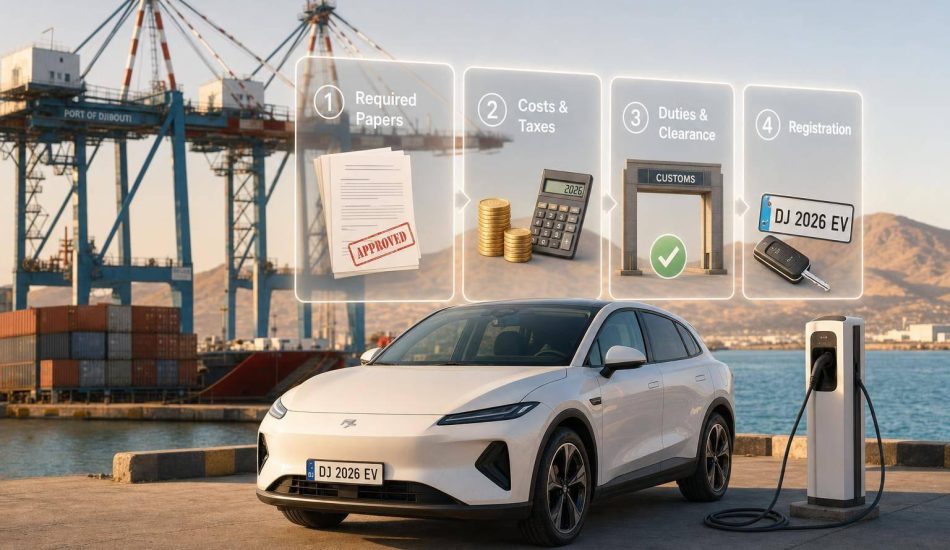
The platform also ensures vehicles are delivered across all 54 African countries, removing the complexities of importing. With clear, upfront pricing, buyers can rest assured there won’t be any surprise fees or unexpected import duties after committing to a purchase. For those in regions with limited access to local dealerships, this delivery service opens up opportunities to own models that might otherwise be out of reach.
Are electric vehicles actually selling in South Africa? EV and hybrid sales stats 2024
Conclusion: The Better Choice for Africa Today
Based on the comparisons outlined earlier, hybrids emerge as the more practical option for most African buyers right now. The challenges of inconsistent infrastructure and unreliable power grids across much of the continent make EV adoption difficult in many areas. Hybrids, on the other hand, eliminate "range anxiety" by leveraging Africa’s existing network of fuel stations while still offering improved fuel efficiency for city driving. As Keletso Mpisane, Head of Blink by MiWay, aptly states:
"Traditional hybrids will help city commuters reduce fuel costs and be able to take a road trip when desired".
That said, EVs are becoming a feasible choice in specific regions with better infrastructure. Countries like South Africa, Morocco, Mauritius, and Seychelles are seeing improvements in grid reliability and charging networks, making EVs a good fit for daily commutes in urban settings. For city dwellers with secure garages and access to wallbox chargers, EVs can be particularly cost-effective for short trips. In Kenya and Rwanda, innovative battery-swapping models for electric two- and three-wheelers have proven successful. For example, Nairobi’s ARC Ride operates about 80 charging cabinets as of 2024, ensuring riders are never more than 2 to 2.5 miles from a battery swap station. These developments highlight the growing, though still limited, potential for EVs in certain parts of Africa.
A survey conducted in September 2025 among over 6,700 South African car owners reflects the current reality. It found that 60% of diesel drivers are likely to consider a hybrid within the next three to five years, while only 38% are considering a fully electric vehicle. This preference underscores the importance of addressing infrastructure limitations before EVs can achieve broader adoption. As transport engineers have observed:
"Fleets will have to contain a mix of electric and combustion-based engines if countries want to continue to transport the same amount of goods and people they are currently transporting".
The bottom line: If you frequently drive long distances, don’t have reliable home charging, or live outside major cities, a hybrid is likely your best bet. However, if you live in a region with consistent electricity, have access to home charging, and primarily drive within city limits, an EV could be a suitable choice. EV24.africa offers transparent pricing, flexible financing options, and a range of vehicles to support sustainable transportation across the continent.
FAQs
Why are hybrid cars often more practical than electric vehicles in Africa?
Hybrid cars often make more sense than fully electric vehicles (EVs) in many parts of Africa, and there are several reasons why. For starters, hybrids are usually easier on the wallet. They skip the hefty upfront price tag that comes with many EVs, making them a more budget-friendly option for buyers.
Then there’s the convenience factor. With hybrids, you can refuel at any gas station, which is a big deal in areas where EV charging stations are few and far between. Plus, hybrids help ease range anxiety – that worry about running out of power – by combining a gasoline engine with an electric motor. This setup lets drivers cover long distances without constantly hunting for charging points.
Another consideration is the climate. Many African regions experience high temperatures, which can speed up battery wear in EVs. Hybrids, on the other hand, are less affected by extreme heat, making them a more durable option in these conditions. All these factors make hybrid cars a practical and dependable choice for many African drivers.
How do frequent power outages affect the practicality of EVs in Africa?
Frequent power outages, often called "load-shedding" in many African countries, present a major hurdle for the widespread use of fully electric vehicles (EVs). Take South Africa, for instance – scheduled power cuts are a regular occurrence, making it tough for EV owners to consistently charge their cars. This leaves drivers dependent on the range from their last full charge, which can make EVs less reliable for everyday needs. Some may even resort to keeping a gasoline-powered backup vehicle, which undercuts both the cost advantages and environmental benefits of going electric.
On top of that, a surge in EV adoption could put even more pressure on already overburdened electrical grids. This could lead to higher peak demand and faster grid deterioration, making blackouts even more frequent. Without alternative solutions like off-grid charging stations or smart charging technologies, these risks remain a serious concern. For now, hybrid vehicles – able to switch to internal combustion engines during outages – might be the more practical option in areas with unstable power supplies. However, as renewable energy options like solar-powered charging stations become more available, EVs could eventually become a more realistic choice for drivers across the continent.
What are the key cost differences between hybrids and EVs in Africa?
The cost difference between hybrid vehicles and electric vehicles (EVs) in Africa largely comes down to upfront prices versus long-term savings. Hybrids are generally easier on the wallet when it comes to the initial purchase, often priced similarly to traditional gas-powered cars. On the other hand, EVs come with a heftier price tag due to the high cost of battery technology and, in some cases, elevated import taxes. Entry-level EVs typically start at around $4,800, while mid-range and luxury options can soar past $85,000.
However, when you shift focus to running costs, EVs often come out ahead. They cut out gasoline entirely and run on electricity, which tends to be cheaper per mile – especially in regions where renewable energy is prevalent. Plus, EVs require less maintenance because they have fewer moving parts and don’t need oil changes. This can reduce maintenance expenses by 30–50%. Hybrids, while more fuel-efficient than standard gas-powered vehicles, still rely on gasoline and need regular refueling.
There are also some additional costs to weigh. For EV owners, setting up a home charging station averages about $826 in certain markets. Insurance premiums for EVs also tend to be slightly higher compared to hybrids. So while hybrids are easier on the budget upfront, EVs could save you a significant amount in the long run through lower fuel and maintenance costs.