
 Thabo Nkosi
Importing electric vehicles (EVs) from China to Cameroon in 2025 is a viable option thanks to reduced customs duties, tax incentives, and affordable models from Chinese manufacturers. Here’s what you need to know:
- Why China? China is a global leader in EV production, offering budget-friendly options with diverse models suitable for Cameroon’s roads.
- Government Incentives: Cameroon provides a 50% reduction in taxable import value for EVs, batteries, and charging stations under the 2025 Finance Law (valid for 24 months starting December 2025).
- Key Costs: Import costs include the EV’s price (FOB), shipping ($2,500–$4,500 for container shipping), customs duties, VAT, and inland transportation.
- Required Documents: Purchase invoice, bill of lading, certificate of origin, inspection certificate, technical specifications, and proof of payment.
- Shipping Options: Container shipping is recommended for better protection, while RoRo is cheaper but less secure.
- Post-Arrival Steps: After customs clearance, vehicles must pass technical inspections and registration.
Chinese brands like BYD, Geely, and Leapmotor offer models with competitive pricing and reliable performance. Platforms like EV24.africa simplify sourcing and logistics, ensuring smoother imports. Proper planning, document preparation, and working with experienced suppliers or agents are crucial for success.
Takeaway: With the right approach, importing EVs from China to Cameroon can be cost-effective and straightforward, especially with government incentives and China’s robust EV market.
How to Import Electric Cars from China?
Cameroon’s Import Rules and EV Incentives
Understanding the import regulations for electric vehicles (EVs) in Cameroon is essential before diving into the process. As the country works to expand its EV market, it has introduced specific measures to encourage adoption, including tax breaks and streamlined documentation requirements. These steps make this a promising time to consider importing EVs from China. Below, you’ll find details about the customs duties, tax incentives, and required paperwork.
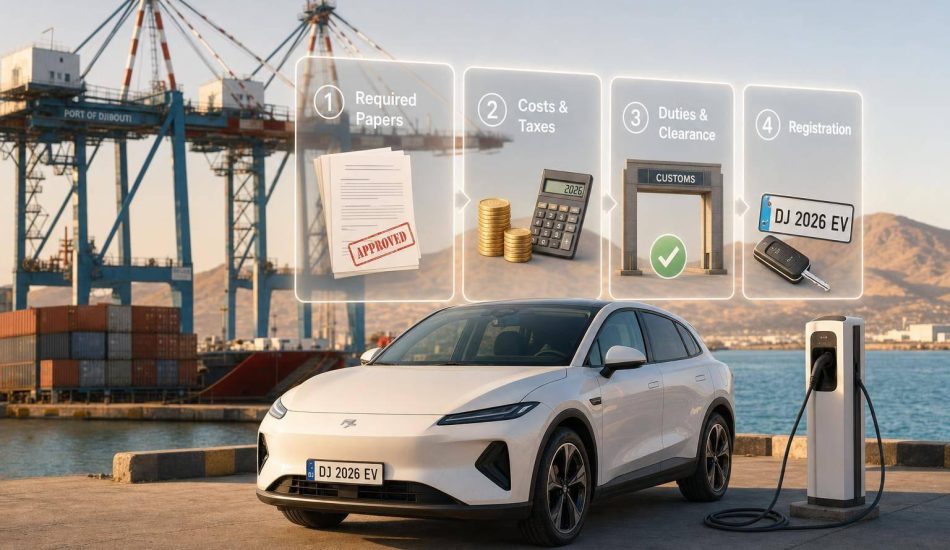
Customs Duties and Tax Structure for EVs
Cameroon’s standard customs duty framework applies to all vehicle imports, but EVs enjoy significant reductions. For conventional vehicles less than 15 years old, customs duties are calculated by applying 91% to the assessed value, which includes the FOB (Free on Board) value plus freight costs. Vehicles older than 15 years face a higher duty rate of 107%.
However, under the 2025 Finance Law, EVs, electric motorcycles, their batteries, and charging stations benefit from a 50% reduction in taxable import value. This incentive is available for a limited 24-month period starting in December 2025, offering substantial cost savings for importers during that time.
In addition to customs duties, importers must factor in value-added tax (VAT) and any excise duties, which are calculated based on the reduced taxable value. For instance, if you’re importing an EV with a combined FOB and freight value of $20,000, the taxable value would drop to $10,000 before applying the standard duty rates.
To maximize savings, it’s important to understand the eligibility criteria for these incentives and ensure compliance with all requirements.
Tax Exemptions and Incentive Eligibility
The 50% reduction applies strictly to EVs, electric motorcycles, batteries, and charging stations. Hybrid vehicles or conventional cars with partial electric features are not eligible.
For shipments valued over 1,000,000 FCFA (approximately $1,589), you must submit a prior declaration through the Guichet unique du commerce extérieur. Accuracy is critical here, as false declarations or omissions are treated as fraud under the CEMAC Customs Code, leading to severe penalties.
To navigate these complexities, consider hiring a skilled customs clearing agent. These professionals can ensure your EV is correctly classified, the right incentive rates are applied, and that all documentation complies with Cameroon’s regulations. They can also assist in determining the FOB value, which is crucial for calculating the assessed value and final duty amount.
Required Import Documentation
Having the right documentation is non-negotiable. Missing or incomplete paperwork can result in delays, additional costs, or even the rejection of your shipment at the port.
Here’s what you’ll need:
- Purchase Invoice: This should detail the EV’s make, model, year, battery capacity, purchase price, and other specifications needed for customs valuation.
- Bill of Lading: This document confirms the vehicle has been loaded onto the shipping vessel and includes freight costs, which are used in duty calculations. Keep the original secure, as it’s required to claim the vehicle at the port.
- Certificate of Origin: Issued by an authorized body (like the Chinese Chamber of Commerce), this verifies that the vehicle was manufactured in China and qualifies under applicable trade agreements.
- Inspection Certificate: Depending on the vehicle’s age and condition, you may need a certificate from a recognized agency to confirm compliance with safety and technical standards.
- Technical Specifications: Provide detailed documentation on the EV’s battery type, charging capacity, range, and safety features. This helps customs officials verify that the vehicle qualifies for incentives and meets local standards.
- Proof of Payment: Maintain records of all transactions, including vehicle purchase, shipping costs, and insurance, to create a complete financial trail for customs clearance.
To avoid hiccups, keep both physical and digital copies of all documents organized in a dedicated folder throughout the import process. This level of preparation can save time and reduce stress when navigating customs procedures.
Step-by-Step Import Process from China to Cameroon
Importing an electric vehicle (EV) from China to Cameroon involves several key steps that need careful attention to detail.
Selecting Your EV Model and Supplier
Start by picking an EV that suits Cameroonian conditions, such as the climate, road infrastructure, and charging facilities. Look for suppliers with experience in exporting to Africa. Ensure they provide essential documents like the original state title, bill of sale, and detailed vehicle specifications. These will be crucial for a smooth import process.
Shipping and Customs Clearance
Once you’ve finalized your purchase, it’s time to arrange shipping. One critical requirement is obtaining the BESC (Bordereau Électronique de Suivi des Cargaisons) document, which costs $275 per vehicle. This document is mandatory for any cargo heading to Cameroon and helps customs officials track and clear your shipment efficiently.
Notify both your shipping company and Cameroon Customs about your intent to import an electric vehicle. This ensures the shipment is handled appropriately and classified correctly. Double-check that all necessary documents are included with your shipment.
When your EV arrives at the port, work with an experienced customs clearing agent. They’ll assist with the import declarations and ensure your vehicle is correctly classified. Proper classification is essential since Cameroon offers incentives for EV imports. According to Invest-Time, "Electric vehicles and motorcycles, together with their batteries and charging stations, will benefit from a 50% reduction on their taxable value for a period of 24 months". After clearing customs, you’ll need to move on to technical inspection and registration.
Technical Inspection and Registration
Following customs clearance, your EV must pass a technical inspection to confirm it meets Cameroon’s safety and environmental standards. Bring your customs clearance documents, bill of sale, and technical specifications to the inspection center to obtain a conformity certificate.
Once you have the conformity certificate, head to the registration office with all your documents. Under the 2025 Finance Bill, fully electric vehicles are exempt from road taxes. Be ready to provide proof that your vehicle is 100% electric. Completing these steps will allow you to legally drive your EV in Cameroon.
Shipping Methods and Cost Management
Picking the right shipping method and getting a clear picture of your total costs upfront can save you a lot of money when importing an electric vehicle (EV) from China to Cameroon.
Comparing Shipping Methods
Container shipping is often the go-to choice for transporting EVs. Why? It provides full protection inside a secure metal container – essential for high-value vehicles with sensitive batteries and electronics. For a 20-foot container, expect costs between $2,500 and $4,500, while a 40-foot container ranges from $3,200 to $5,300. If you opt for a Less than Container Load (LCL), you’ll pay around $150 per cubic meter. Transit times from ports like Shanghai or Ningbo to Douala typically range from 30 to 45 days.
While RoRo (Roll-on/Roll-off) shipping is cheaper for standard vehicles, container shipping offers better protection. As BR LOGISTICS USA INC explains:
Container shipping from the USA to Douala, Cameroon, offers a secure and private way to ship your vehicle. This method, more costly than RO-RO, ensures your car is the only one in the container, providing enhanced protection and security. Ideal for high-value vehicles or when shipping personal items along with the car.
The same benefits apply when shipping from China.
Air freight is another option, delivering in just 3–7 days. However, with costs of $4–$9 per kilogram, it’s not practical for a 1,500–2,000 kg EV.
DDP (Delivered Duty Paid) shipping is an all-in-one service where the freight forwarder handles shipping, customs clearance, and delivery. This option reduces unexpected costs but comes with a higher price tag. Transit times are usually 35 to 45 days.
When shipping your EV, it’s crucial to provide your agent with all necessary details. Clearly label the VIN and propulsion type on the windshield, and ensure you have complete battery specs, safety certifications, and MSDS documentation. Lithium-ion batteries are considered hazardous and must be booked as IMO cargo.
Total Cost Breakdown from China to Cameroon
The total cost of importing an EV includes several components: the FOB price, shipping costs, BESC fees, marine insurance, customs duties, port fees, and inland transportation.
Start with the FOB (Free on Board) price, which is the vehicle’s cost as quoted by the supplier. Add shipping costs, which range from $2,500 to $4,500 for a 20-foot container. Don’t forget the mandatory BESC (Bordereau Électronique de Suivi des Cargaisons) document, costing $275 per vehicle.
Marine insurance is another key cost, usually 1% to 2% of the vehicle’s value. For a $20,000 EV, this means $200 to $400.
Customs duties and taxes are often the biggest expense. Work closely with your customs agent to ensure proper classification and avoid surprises.
At Douala port, you’ll also encounter port fees and handling charges, covering terminal handling, documentation, and storage. Be aware of demurrage charges, which can average $150 per vehicle per day if your shipment isn’t collected within 72 hours.
Finally, account for inland transportation to move the EV from the port to its destination. Negotiating under CIF (Cost, Insurance, Freight) terms with your supplier can simplify these calculations and reduce logistical headaches.
By carefully calculating each cost, you can ensure a smooth and predictable import process.
Reducing Delays and Costs
Taking proactive steps can help you avoid delays and keep costs under control.
- Submit documentation early: Aim to have all paperwork ready at least a week before your vessel arrives. This gives customs officials enough time to review your documents and prevents costly delays or demurrage fees.
- Work with experienced professionals: Partner with licensed exporters in China and seasoned freight agents in Cameroon who understand the specific requirements for importing EVs.
- Communicate with your local agent: Stay in touch with your Cameroonian agent to coordinate inspections and document submissions well in advance.
- Consolidate shipments: If you’re importing multiple vehicles or working with other buyers, sharing a 40-foot container can significantly lower the per-vehicle shipping cost.
- Choose the right shipping route: Over 90% of vehicle shipments from China to Africa use a port-to-port service model, leaving buyers to handle post-arrival logistics. Direct routes from major Chinese ports like Shanghai, Ningbo, or Guangzhou to Douala offer reliable schedules and competitive pricing.
China’s automotive exports to Africa are booming. In 2024, exports grew by 65% year-on-year, with over 30% being new energy vehicles. The increasing trade volume on this route reflects its growing importance for EV imports.
sbb-itb-99e19e3
Chinese EV Brands and Sourcing Options
Once logistics and costs are sorted, the next step is choosing a reliable EV manufacturer and sourcing channel. As the world’s largest producer of electric vehicles, China offers several brands that are well-suited for African conditions.
Top Chinese EV Manufacturers for African Markets
BYD is a global leader in EV production and battery manufacturing. With millions of vehicles produced annually, BYD benefits from cost efficiency and a stable supply chain. Its "Blade Battery" technology stands out for its safety and durability – features that are critical for hot climates and mixed road conditions like those in Cameroon. BYD’s diverse lineup includes small city EVs, sedans, SUVs, and buses, catering to private buyers, taxi fleets, and public transport operators. Its vertical integration ensures steady pricing and readily available parts.
SAIC (MG) and Geely are rapidly expanding in Africa, with local distributors and assembly plants in countries like Egypt and South Africa. Geely offers budget-friendly models such as the Panda Mini Base ($5,880) with a 120 km range, perfect for city commutes, and the Geometry G6 ($23,860), which boasts a 620 km range for longer trips. Both brands prioritize durability, offering higher ground clearance to handle the rough roads often found in Cameroonian cities and rural areas.
Leapmotor delivers value-focused options with competitive features. Models like the C11 Performance ($31,300) with a 550 km range and the compact T03 ($12,000) with a 403 km range are ideal for first-time EV importers and budget-conscious fleet operators.
Dongfeng provides a wide range of vehicles for African markets. The affordable NanoBox ($8,300) offers a 321 km range, while the premium eπ 008 EV ($28,700) delivers an impressive 636 km range. For commercial and fleet applications, the rugged Rich 7 EV ($41,700) is a strong contender.
Chery and Great Wall Motor (ORA) have established sales networks in countries like Ethiopia and Nigeria, signaling growing support infrastructure in Africa. Meanwhile, GAC Aion focuses on efficiency and competitive pricing, making its models appealing for taxi services and ride-hailing businesses.
Chinese manufacturers typically refresh their models every 2–3 years, much faster than the 5–7 year cycles common with many Western brands. This pace leads to frequent advancements in range, charging speeds, and pricing. Additionally, with control over 80% of global lithium-ion battery production, Chinese companies maintain a clear edge in cost and technology, which reflects in competitive export pricing.
These manufacturers set the foundation for leveraging dedicated sourcing platforms to simplify the procurement process.
Using EV24.africa for Vehicle Sourcing
EV24.africa is the first online marketplace dedicated exclusively to electric vehicles across all 54 African countries. The platform provides detailed model specifications, FOB or delivered pricing to Douala, and manages logistics from customs clearance to vehicle registration. When browsing EV24.africa, you’ll find key details like battery size, range, charging type, and ground clearance.
The platform offers both port-to-port and door-to-door delivery options using RoRo or container shipping. Transparent pricing – free of hidden fees – and flexible payment options make it especially appealing for fleet buyers such as taxi operators, ride-hailing companies, government agencies, and corporate fleets. It also ensures compliance with Cameroon’s import documentation and technical standards, making the entire process seamless. By using EV24.africa, you can access vehicles tailored to local conditions, ensuring they align with Cameroon’s infrastructure and climate.
Verifying Supplier Credibility
To avoid fraud and ensure smooth delivery, verifying supplier credibility is crucial. Always request the supplier’s Chinese business and export licenses, and ask for references to confirm their reliability. If a supplier claims to be an official brand distributor, request manufacturer authorization letters and verify their contact details through official brand channels.
Third-party inspection services in China can perform pre-shipment checks, reviewing the odometer, battery health, VIN accuracy, and adherence to the pro-forma invoice. These inspections typically cost between $150 and $300 but can save you from costly issues later. Additionally, ask for recent factory audits or inspection reports to confirm the supplier’s quality control processes.
Use online verification tools to cross-check the supplier’s factory location, registration details, and contact information. For larger purchases or fleet orders, consider hiring a sourcing agent in China to visit the factory, inspect the vehicles, and verify the supplier’s operations. This extra step can offer invaluable peace of mind.
While platforms like EV24.africa handle much of the verification process, these steps are essential if you’re dealing directly with new suppliers or arranging direct imports. A verified supplier minimizes risks and ensures smoother compliance with local technical standards.
Compliance and Local Readiness Requirements
Importing an electric vehicle (EV) into Cameroon involves more than just customs clearance and duty payments. To ensure a smooth process and reliable operation, your EV must meet specific technical standards, work seamlessly with the local power grid, and have access to adequate maintenance resources. Understanding these requirements ahead of time can save you from unnecessary delays and complications.
Technical Conformity and Homologation Standards
Cameroon’s technical standards for imported goods, including EVs, align closely with those of the European Union (EU). This alignment simplifies the process for many Chinese EVs, as their export models are often built to meet EU requirements.
The Agence de Régulation des Télécommunications (ART) oversees the approval process for vehicles with electronic and radio-emitting components. Modern EVs, equipped with features like radar sensors, radio key fobs, keyless entry systems, tire pressure monitors, and entertainment systems, must comply with EU Directive 2014/53/EU, which governs radio equipment standards. For instance, radar sensors operating at frequencies like 24 GHz and 77 GHz, or entertainment systems using 2.4 GHz, fall under this directive.
ART may request product samples for inspection, and certificates for approved components remain valid for 36 months, requiring proper labeling. Additionally, every imported EV must pass an SGS inspection to secure an Attestation de Conformité (AC), which is then converted into a Certificate of Conformity (CoC) by the Standards and Quality Agency (ANOR). To obtain the CoC, you’ll need to provide detailed documentation, including test reports and quality certificates, proving the vehicle meets all required standards. An Attestation of Verification to Import (AVI) from SGS is also necessary, which may include additional technical documents. Preparing all these materials in advance can help avoid delays at the port.
To simplify the process, confirm with your supplier that the EV meets EU conformity standards. Request copies of all relevant certificates and test reports. Platforms like EV24.africa can also assist by listing vehicles that already comply with Cameroon’s import and technical requirements.
Charging Infrastructure and Grid Compatibility
Cameroon’s public charging network is still in its infancy. As of 2025, there are only three charging stations in the country – two in Douala and one in Yaoundé. This limited infrastructure means most EV owners rely on home charging solutions. Fortunately, electricity costs in Cameroon are relatively low, ranging from 50 to 99 CFA francs per kWh (plus VAT), with an average of about CFA 80 per kWh. For example, charging a 60 kWh battery pack would cost approximately CFA 5,040, making EVs at least 50% cheaper to run compared to fuel-powered vehicles.
Before importing an EV, ensure your home electrical system can support charging requirements. If necessary, consult a licensed electrician to assess and upgrade your system. The Cameroonian government is working to promote EV adoption through initiatives in the 2025 Finance Bill, which include plans for subsidized charging stations and regulatory updates to expand the charging network. While these efforts are promising, home charging remains the most practical option for now.
Maintenance and Spare Parts Access
EVs generally require less maintenance than traditional combustion vehicles – there’s no need for oil changes, and regenerative braking reduces wear on brakes. However, when repairs are needed, access to spare parts and skilled technicians becomes essential.
Although Chinese EV manufacturers are increasing their presence in Africa, service networks in Cameroon are still developing. Before purchasing an EV, research whether the manufacturer has authorized service centers or parts distributors available in Cameroon or nearby countries. While standard parts like tires and brake pads can often be sourced locally, specialized components – such as battery management systems or electric motors – usually need to be ordered directly from the manufacturer or an authorized distributor.
Discuss warranty coverage and parts availability with your supplier. Some manufacturers operate international parts warehouses capable of shipping to Africa within two to three weeks. Keeping detailed maintenance records and diagnostic reports can also make warranty claims and repairs more efficient.
As Cameroon’s EV market continues to grow, service infrastructure is expected to improve. In the meantime, choosing manufacturers with established regional networks can help ensure better access to spare parts and reliable maintenance support.
Conclusion: Key Points for Cameroonian Importers
Bringing an electric vehicle (EV) from China to Cameroon in 2025 is entirely feasible with careful planning, reliable partners, and staying informed about the latest regulations.
Import Process Overview
Each step of the import process – from verifying your supplier to clearing customs – is essential for a smooth experience. The journey begins with selecting the right EV model and confirming the supplier’s credibility. Next, you’ll arrange ocean freight, secure marine insurance, and prepare all necessary documents to avoid delays during customs clearance. After that, the vehicle must undergo technical inspection and registration with local transport authorities.
When budgeting, factor in all costs, from the FOB price to inland transportation. For example, a mid-range Chinese EV with an FOB price of $15,000 could end up costing between $20,000 and $23,000 by the time it’s fully registered and ready to drive. This estimate will vary based on shipping methods and current duty rates. Always include a financial buffer for unexpected expenses, such as port storage fees if clearance takes longer than expected.
By following these steps, you can streamline the process and avoid common pitfalls. Below are additional recommendations to further enhance your import experience.
Final Recommendations for Successful Imports
To simplify the process and reduce risks, consider working with specialized platforms like EV24.africa. These platforms provide vetted EV options and comprehensive logistics support, helping you avoid issues like counterfeit documents, misdeclared vehicles, or surprise storage fees – common challenges for independent importers.
Chinese EV manufacturers have significantly shortened their product development cycles to just 2–3 years, enabling rapid advancements in battery range, charging speeds, and software features. Their growing reputation is evident in the European market, where their share has climbed to over 30%, compared to less than 10% just a few years ago. This trend reflects increasing global confidence in Chinese EV technology and quality.
Before committing funds, create a detailed checklist that includes model selection, supplier verification, cost estimation, shipping arrangements, customs preparation, and post-arrival registration. It’s wise to get quotes from multiple suppliers or platforms and consult with a customs broker or experienced importer to clarify any uncertainties. For businesses planning fleet purchases, start small with one or two vehicles to test the process and identify any challenges before scaling up.
Make sure the EV’s technical and charging requirements match Cameroon’s infrastructure. Currently, public charging stations are limited – two in Douala and one in Yaoundé – so most owners rely on home charging setups. Additionally, identify at least one trusted service provider or parts supplier for specialized maintenance needs.
Keep in mind that regulations, incentives, and technical standards can change quickly. Chinese EV models, pricing, and technologies also evolve rapidly. Before placing your order, double-check official Cameroonian government resources, industry associations, and credible EV platforms to ensure you’re working with the most up-to-date information. While this guide offers a solid foundation, time-sensitive details like duty rates, available incentives, and specific documentation requirements should be verified close to your import date.
Chinese EVs present an appealing option with competitive prices, good range for city and intercity travel, and lower running costs compared to traditional combustion vehicles. However, factors like currency fluctuations, changing regulations, and developing after-sales support networks highlight the importance of thorough research. By following these steps and staying informed, you’ll be well-prepared to navigate the import process and embrace the future of mobility in Cameroon.
FAQs
What government incentives are available for importing electric vehicles from China to Cameroon in 2025, and how can I make sure my vehicle qualifies?
In 2025, the Cameroonian government will introduce a 50% reduction on the taxable value for electric vehicles, electric motorcycles, batteries, and charging stations. This incentive is set to last for 24 months, providing a great opportunity for those looking to invest in greener transportation options.
To take advantage of this reduction, ensure your vehicle complies with all import regulations. This includes having the correct documentation and meeting Cameroonian customs requirements. Working with a licensed customs broker or an import specialist can make the process smoother and help you avoid unnecessary complications.
How can I ensure that Chinese electric vehicle suppliers are credible and that I’m purchasing a reliable car?
To make sure you’re dealing with trustworthy Chinese EV suppliers and making a safe purchase, it’s important to take a few key steps. Start by checking their business license through official Chinese enterprise databases to confirm their legitimacy. Ask for third-party audit reports or certifications to see if they meet international standards. A video call with the factory can give you a closer look at their operations, and requesting a sample or small trial order allows you to evaluate the product’s quality firsthand.
For extra peace of mind, use escrow services or payment methods that offer buyer protection. You might also want to hire a quality inspection agent to verify the vehicle’s condition before it ships. These precautions can help you avoid potential issues and ensure a smooth, reliable transaction.
What are the challenges with charging electric cars in Cameroon, and how can I address them?
Charging imported electric vehicles (EVs) in Cameroon comes with its own set of hurdles, particularly due to the scarcity of charging stations, which is even more pronounced in rural regions. The current infrastructure is still in its infancy, making it challenging to find accessible and convenient charging options.
To address this, installing a home charging station can be a practical solution if it’s within your means. This gives you a dependable way to keep your EV charged. Additionally, take the time to identify public charging points and plan your trips around their locations. Keeping an eye on new government programs or private initiatives aimed at expanding the charging network in Cameroon can also help you stay ahead of the curve.