
 Thabo Nkosi
Importing electric cars from China to Côte d’Ivoire in 2025 involves understanding regulations, costs, and logistics. Côte d’Ivoire is focusing on electric mobility, with plans for 10% EV adoption by 2030. Chinese manufacturers like BYD, Geely, and Changan offer affordable and diverse EV options, making them attractive for individual buyers and businesses. However, the process includes navigating customs, ensuring compliance with local standards, and managing shipping logistics. Here’s what you need to know:
- Documents Required: Commercial invoice, certificate of origin, packing list, bill of lading, and pro-forma invoice.
- Costs: Import duties (around 53% of vehicle value), VAT, and registration fees (~$750). Tax incentives and subsidies may reduce costs.
- Shipping: Use trusted logistics partners to handle transport from Chinese ports to Abidjan.
- Supplier Selection: Vet manufacturers for quality, warranty, and after-sales support. Platforms like EV24.africa simplify sourcing and logistics.
- Post-Import: Register the vehicle, ensure technical compliance, and plan for maintenance and charging infrastructure.
This guide simplifies the process, helping you avoid delays and hidden costs while taking advantage of Côte d’Ivoire’s growing EV market.
How to Import Electric Cars from China?
Import Regulations and Costs for Electric Vehicles in Côte d’Ivoire
Before diving into the process of importing electric vehicles (EVs) to Côte d’Ivoire, it’s essential to understand the regulatory and financial landscape. The country has set an ambitious goal of achieving 10% electric vehicle adoption by 2030, which has led to the introduction of supportive policies aimed at encouraging EV use.
Import Regulations for Electric Vehicles
Bringing EVs into Côte d’Ivoire involves adhering to standard customs procedures, along with additional requirements specific to electric vehicles. In 2024, the government implemented a decree to promote EV adoption, signaling a more structured approach to managing the market.
To ensure smooth customs clearance, importers need to prepare several key documents, including:
- A commercial invoice detailing the purchase price.
- A certificate of origin from the vehicle’s Chinese manufacturer or exporter.
- A packing list describing the shipment’s contents.
- A bill of lading (for sea freight) or an air waybill (for air freight).
- A pro-forma invoice outlining the terms of the transaction.
Additionally, EVs must comply with evolving standards, as the government collaborates with organizations like the Global Green Growth Institute (GGGI) to strengthen e-mobility regulations and encourage low-carbon transport solutions. One critical step is the homologation process, which verifies the vehicle’s technical specifications. This is particularly important as the transport sector contributes about 30% of Côte d’Ivoire’s greenhouse gas emissions. Of the 1.5 million vehicles in circulation as of 2023, fewer than 1,000 were electric. Importers should stay updated on regulatory changes as the framework develops.
Duties, Taxes, and Incentives Breakdown
When importing EVs, standard costs include customs duties based on the vehicle’s declared value and Value Added Tax (VAT). However, the government is introducing tax reductions and subsidies to make EV purchases more appealing. As noted by capmad.com:
"Tax incentives will be put in place to encourage the purchase of electric vehicles. This could include import tax reductions and subsidies for buyers."
In 2023, the average cost of an electric car stood at around $20,000, compared to approximately $10,000 for a gasoline-powered vehicle. While EVs are currently more expensive, the government’s planned incentives and commitment to building 1,500 charging stations by 2030 could make them a more cost-effective option over time. For businesses or fleet operators importing multiple vehicles, these incentives could result in considerable savings in the long run.
With the regulatory framework and cost structure becoming clearer, the next step involves navigating shipping logistics and customs procedures.
Finding Chinese EV Suppliers
Once you’ve nailed down the regulatory requirements and cost estimates, the next big step in your import journey is choosing the right supplier. China has emerged as the world’s largest car exporter, with electric vehicles (EVs) and hybrids from brands like BYD, SAIC, Geely, Changan, and Great Wall Motor leading the charge. This rapid growth offers African importers a variety of options, but it also underscores the need for thorough vetting to ensure suppliers meet quality, compliance, and after-sales service expectations.
Chinese EV Manufacturers and Exporters
Several leading Chinese EV brands are actively exporting to African markets and present solid opportunities for importers in Côte d’Ivoire. Take BYD, for instance – it specializes in advanced battery technology and offers a diverse range of vehicles, from compact cars to buses, ideal for fleet operations or public transport projects. Geely, known for its global ambitions, adheres to stringent safety standards, which can make regulatory compliance easier. Meanwhile, Dongfeng and Changan focus on cost-effective compact vehicles and light commercial EVs, making them a practical choice for taxis, delivery services, and small business fleets.
When evaluating manufacturers, look into their export history, partnerships in African markets, and levels of local service support. Pay attention to quality certifications like ISO standards, battery safety records, warranty terms, and the availability of spare parts. A smart move would be to create a comparison matrix that includes each model’s CIF (Cost, Insurance, and Freight) price in U.S. dollars, driving range, battery type, and compatibility with local charging infrastructure. This approach helps balance upfront costs with long-term performance.
Be wary of suppliers who avoid sharing factory addresses, registration documents, or third-party inspection reports. Red flags include refusal to provide video factory tours, lack of references from African customers, or vague contracts missing clear Incoterms, after-sales support, and spare-parts guarantees. Small fleet operators should define their vehicle needs – usage, charging requirements, and budget – before requesting detailed quotes from multiple suppliers. This process will help you zero in on reliable manufacturers, which we’ll explore further.
Using EV24.africa to Source Electric Vehicles
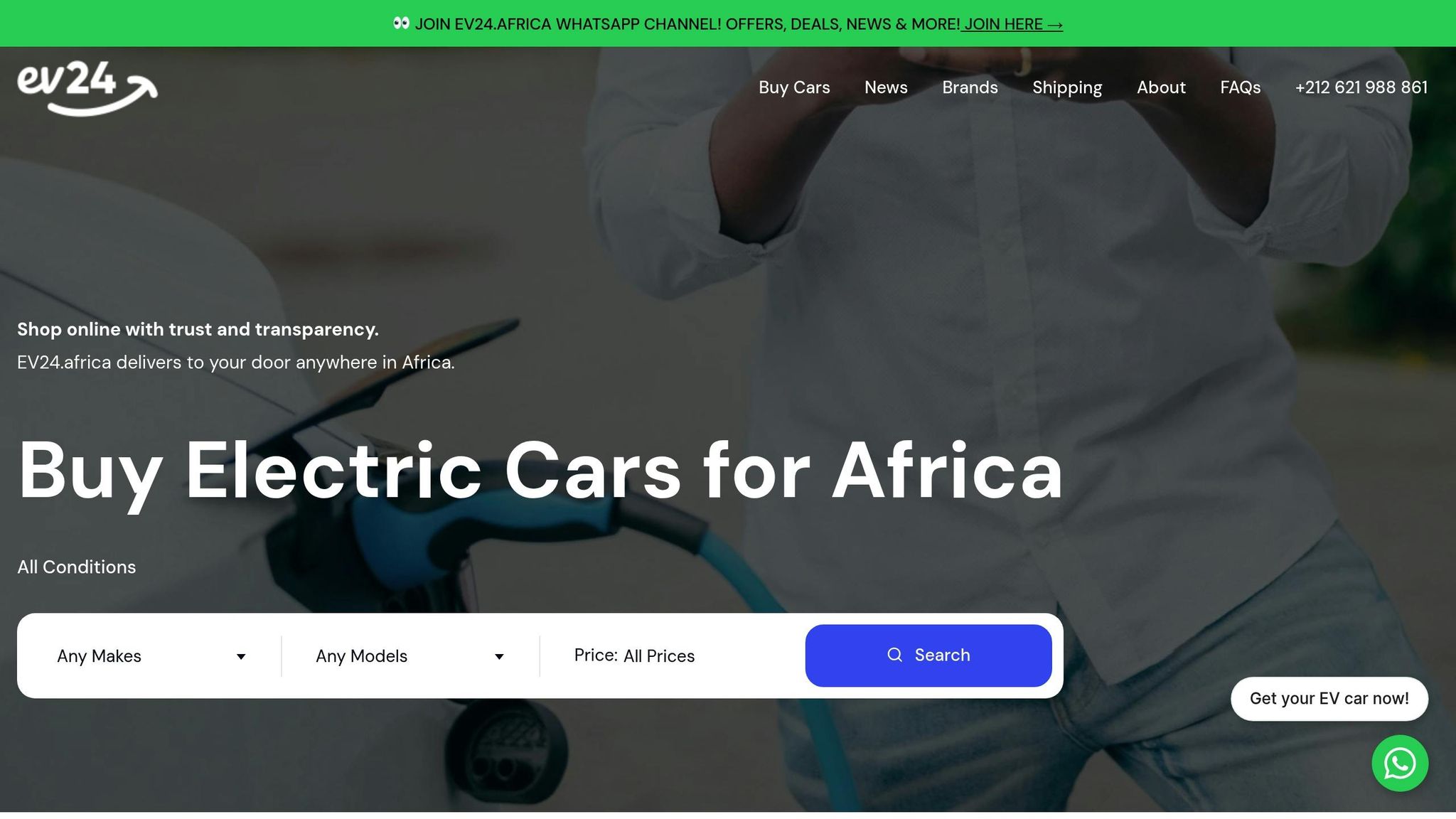
Platforms like EV24.africa can streamline the process of finding the right EVs for markets like Côte d’Ivoire. Unlike general B2B platforms, EV24.africa is tailored specifically for importing Chinese EVs into African countries. It features vetted manufacturers who are familiar with the region’s conditions and regulations.
The platform offers access to major brands like BYD, Dongfeng, and Geely, showcasing a variety of models suited for Côte d’Ivoire’s market. For instance, in 2025, EV24.africa lists the BYD ATTO 3, which boasts a 420 km range and is priced at $47,500. Buyers can create accounts, set preferences, and filter listings by body type, range, battery size, and budget. The platform also includes comparison tools for side-by-side reviews of specifications and allows you to request quotations, with prices displayed in U.S. dollars.
EV24.africa can also connect buyers with logistics partners to handle shipping from Chinese ports to West Africa, manage customs documentation, and arrange inland transport to cities like Abidjan. Financing options through local or regional lenders make it easier to spread the vehicle costs over time. Transparent pricing ensures buyers can calculate the total landed cost, including freight, insurance, duties, and VAT, without any surprises.
Experienced importers often suggest starting with a small pilot batch of vehicles to test performance, energy efficiency, and maintenance costs under local conditions before committing to larger orders. They also emphasize negotiating strong after-sales support, training local technicians on EV maintenance and battery care, and planning for the necessary charging infrastructure. With over 90% of Côte d’Ivoire’s vehicle fleet being imported used, it’s especially important to review battery diagnostics, state-of-health reports, and manufacturer-backed warranties when selecting a supplier.
sbb-itb-99e19e3
Shipping and Customs Clearance Process
Customs Clearance Steps in Côte d’Ivoire
When your shipment arrives at Abidjan Port, the customs clearance process begins. To get started, you’ll need two copies of a French commercial invoice. These invoices should include detailed information such as the names of the exporter and consignee, package specifics, marks, net and gross weights, CIF value, terms of sale, and a clear description of the goods. Including a signed duplicate invoice can help speed up the release process.
You’ll also need two certified copies of the certificate of origin to confirm where the vehicles were manufactured. Adding a packing list can further streamline the process. Lastly, make sure your shipment is clearly identified on the bill of lading or air waybill.
Providing accurate and complete documentation is essential to ensure customs clearance goes as smoothly as possible.
Post-Import Requirements and EV Ownership
Vehicle Registration and Technical Compliance
Once your EV clears customs at Abidjan Port, you’ll need to register it. To complete the registration process, make sure you have these essential documents ready:
- Registration Card from China
- Bill of Lading (indicating the car’s net weight and chassis number)
- Non-Sale Certificate confirming the vehicle’s import status
- Change of Residence Certificate or Letter of Transfer (if applicable)
- Copy of your passport
- Purchase Invoice from your supplier in China
Expect to pay around $750 in registration fees, along with import duties that amount to approximately 53% of the vehicle’s assessed value. Preparing these documents ahead of time and consulting with a local customs broker or vehicle registration expert can make the process much smoother.
Once your EV is registered, keeping it in top condition through regular maintenance is key.
Maintenance and Battery Lifecycle Management
Stick to the maintenance schedule recommended by your EV’s manufacturer, and always use authorized service centers. This ensures your vehicle stays in peak condition and operates safely over time. Proper care is especially important for the battery, as it plays a critical role in your EV’s performance and longevity.
Conclusion: Importing EVs from China to Côte d’Ivoire
Bringing an electric vehicle (EV) from China to Côte d’Ivoire requires careful planning at every stage – from initial research and budgeting to supplier negotiations, shipping logistics, and customs clearance. Staying organized with a comprehensive checklist for documents, payments, shipping schedules, and post-delivery tasks can help ensure a smooth process.
Compliance with regulations is non-negotiable. Côte d’Ivoire’s goal of achieving 10% EV adoption by 2030 means that keeping up with changing technical, safety, and documentation requirements is key to avoiding delays, unexpected costs, or even the risk of vehicle seizure.
It’s essential to calculate the total cost of importing an EV. This includes the purchase price, shipping fees, marine insurance, import duties, VAT, handling charges, broker fees, registration costs (approximately $750), and initial maintenance. While EVs may have a higher upfront cost, their lower operating expenses over time make them a compelling choice.
Platforms like EV24.africa can simplify the process for first-time importers by connecting them with trusted suppliers, providing transparent quotes in U.S. dollars, and managing shipping, customs, and documentation. This minimizes risks and streamlines the experience.
"At EV24.africa, we simplify the process of importing and buying electric vehicles in Africa. Our expertise ensures a seamless, transparent, and stress-free experience, so you can focus on driving the future of mobility." – EV24.africa
"From customs clearance to local registration, we handle everything to ensure a smooth import process." – EV24.africa
Once the logistical and financial aspects are sorted, focus on the long-term aspects of EV ownership. This includes access to reliable charging infrastructure, local maintenance services, and planning for battery recycling or replacement. With the government aiming to establish around 1,500 charging stations nationwide by 2030, aligning your import timeline with the growth of local infrastructure is a smart move.
For individual buyers, start by clearly defining your needs and gathering multiple quotes to compare options. For businesses, a pilot import can help assess scalability while managing risks such as supplier reliability and regulatory changes. Challenges like hidden costs, shipping delays, and shifting regulations can be mitigated by conducting thorough supplier research, using clear written contracts, clarifying Incoterms, and working with experienced intermediaries.
FAQs
What are the main steps for clearing customs when importing electric vehicles from China to Côte d’Ivoire?
Importing electric vehicles from China to Côte d’Ivoire involves a structured customs clearance process. Here’s an overview of the key steps:
- Customs Declaration: Begin by submitting all necessary documents to Côte d’Ivoire’s customs authorities. This includes invoices, shipping details, and certificates of origin.
- Document Review: Customs officials will carefully review the submitted paperwork to ensure everything complies with local regulations.
- Payment of Duties and Taxes: Be prepared to pay any import duties, taxes, and fees based on Côte d’Ivoire’s customs laws.
- Inspection: The vehicles might need a physical inspection to verify they meet required safety and environmental standards.
- Goods Release: Once all steps are completed, the vehicles are officially cleared and ready for delivery.
Double-checking your documents for accuracy and completeness can save time and prevent unnecessary delays or expenses throughout this process.
What steps should I take to ensure the electric vehicle I import meets Côte d’Ivoire’s technical and safety requirements?
To ensure your imported electric vehicle meets Côte d’Ivoire’s technical and safety requirements, here’s what you need to do:
- Obtain battery safety certificates and manufacturer documents outlining the propulsion system, battery capacity, and technical details.
- Secure an environmental compliance certification from accredited testing agencies to align with local regulations.
- Confirm the vehicle meets Côte d’Ivoire’s safety standards, including roadworthiness and operational safety requirements.
These steps will help streamline the import process and ensure your vehicle is fully compliant with legal and safety standards.
Are there any financial incentives or subsidies for importing electric vehicles to Côte d’Ivoire, and how do they affect the overall cost?
Currently, there isn’t much publicly available information about financial incentives or subsidies specifically for importing electric vehicles into Côte d’Ivoire. That said, many governments around the world encourage electric vehicle adoption through tax reductions, lower import duties, or other perks.
To find out if Côte d’Ivoire has similar programs, it’s a good idea to check with local customs offices or relevant government agencies. If such incentives exist, they could help cut down the overall cost of importing an electric vehicle, making it a more appealing choice for both individuals and businesses.