
 Thabo Nkosi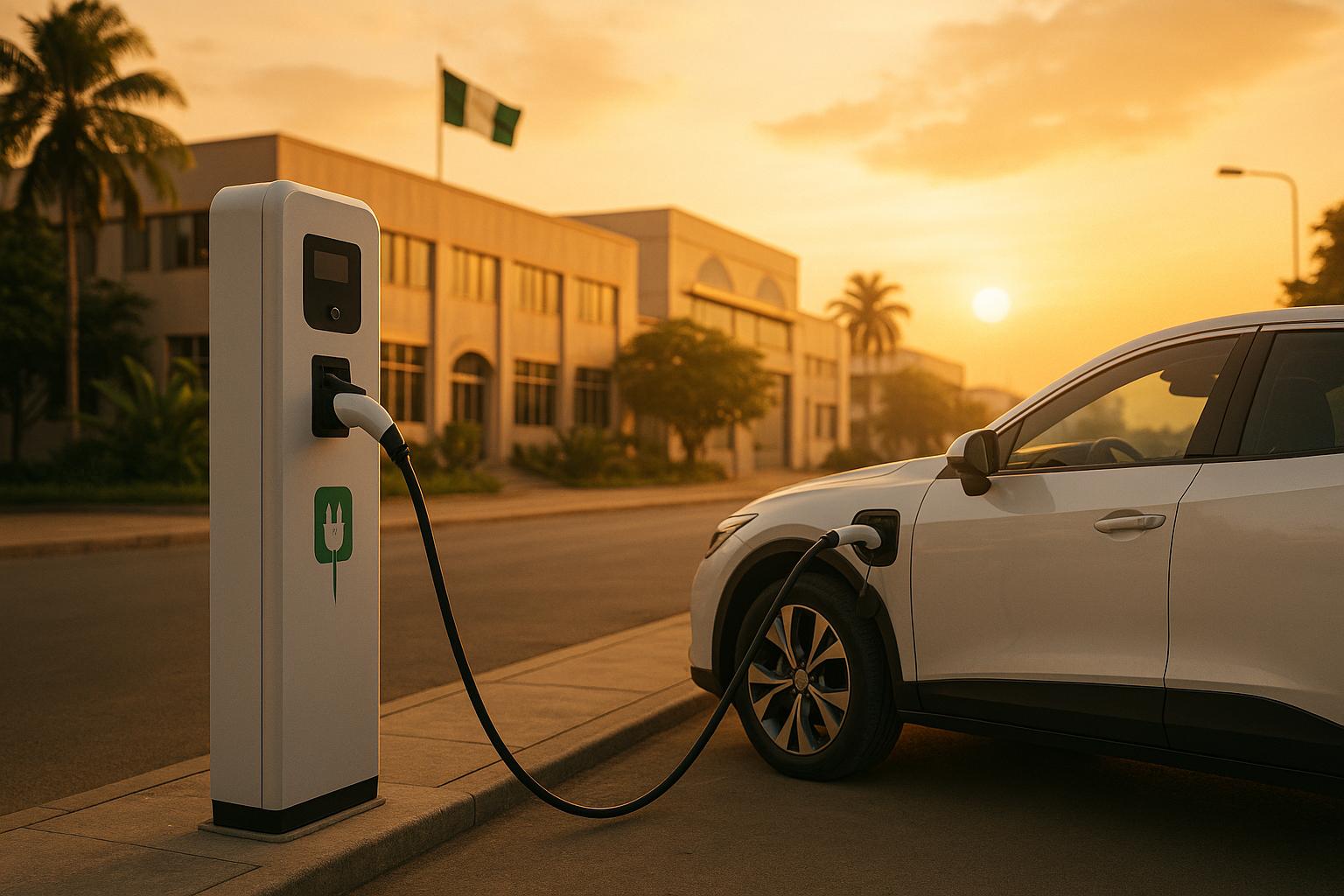
Nigeria’s EV import rules are changing in 2025, and here’s what you need to know:
The government has introduced eight key updates aimed at encouraging local EV production, reducing reliance on imports, and improving infrastructure. These changes include new requirements for foreign automakers, updated tariffs, and mandates for charging station installations. Here’s a quick breakdown:
- Foreign Automakers Partnership: Companies must partner with Nigerian firms and set up local assembly plants within three years.
- Local Assembly Rules: A minimum production of 5,000 units/year is required, with penalties for non-compliance reaching ₦250 million ($156,250).
- Local Parts Sourcing: Automakers must ensure 30% of components are sourced locally by 2030.
- Stricter Licensing Standards: Only licensed assemblers with sufficient capacity can import and sell EVs.
- Revised Tariffs: Higher duties on fully assembled EV imports; reduced tariffs for local assembly components.
- Certification Requirements: SONCAP certification and Euro II emission standards are now mandatory for all imported EVs.
- Fines for Violations: Unlicensed imports face fines of ₦500 million ($312,500) per shipment, plus vehicle confiscation.
- Charging Station Mandate: Fuel stations must install EV charging points, supported by grants and tax credits.
These updates aim to strengthen Nigeria’s local EV industry and make the market more accessible for businesses while addressing infrastructure gaps. Foreign automakers and local businesses need to act fast to meet these new requirements.
1. Foreign Automakers Must Partner with Local Companies
Under the updated EV import regulations, foreign automakers entering Nigeria are required to partner with licensed local assemblers and establish local assembly operations within three years. These local partners must be legitimate manufacturing entities with the capacity to produce at least 5,000 units annually while adhering to international safety and technical standards. This policy aims to boost domestic production while strengthening Nigeria’s industrial capabilities.
The new rules also mandate that by 2030, at least 30% of vehicle components must be manufactured or sourced locally. This approach ensures foreign automakers play a role in Nigeria’s industrial growth, rather than simply importing fully assembled vehicles.
Senator Orji Uzor Kalu highlighted the importance of these regulations, stating:
"This bill will help Nigeria move from dependence on fossil fuels toward a cleaner and sustainable energy system. It will ensure that our local industries benefit directly from the global electric vehicle market, create jobs, and reduce emissions in our cities."
To address concerns about foreign dominance in the EV market, the government has prioritized initiatives that add value and build local capacity. Sam Faleye, Managing Director of Saglev Inc., emphasized this point:
"If you’ll bring in electric vehicles, add value; don’t just import them fully built. There’s a huge difference in cost and maintenance compared to internal combustion engine vehicles, and we’re offering Nigerians a better option."
For foreign automakers, the challenge lies in quickly identifying and partnering with qualified local companies. These partners must prove their licensing credentials, production capabilities, and ability to meet global quality standards. The three-year timeframe for setting up assembly operations adds a sense of urgency for both parties to finalize agreements and begin production.
This partnership model aligns with Nigeria’s broader policy goals by focusing not just on vehicle assembly but also on knowledge sharing. Foreign automakers bring advanced EV technology and manufacturing expertise, while local partners contribute market insights, established supply chains, and skilled labor. Together, these collaborations aim to create a sustainable ecosystem that benefits both the local economy and international stakeholders.
2. Required Local Assembly Plant Setup
Foreign electric vehicle (EV) manufacturers looking to enter the Nigerian market now face a clear mandate: they must establish local assembly plants within three years of the Electric Vehicle Transition and Green Mobility Bill becoming law.
These assembly plants are required to operate on a commercial scale, producing at least 5,000 units annually. Importantly, all vehicles must meet international safety and technical standards, ensuring quality and compliance. This eliminates the possibility of merely symbolic or minimal operations.
Non-compliance comes with steep penalties. Manufacturers that fail to set up assembly plants within the three-year window face fines of up to ₦250 million ($156,250) per violation. Meanwhile, unlicensed importers of EVs risk even harsher consequences, including fines of ₦500 million ($312,500) and having their goods seized.
To encourage manufacturers to meet these requirements, the Nigerian government has introduced a range of incentives. These include tax holidays, waivers on import duties, toll fee exemptions, and subsidies. This mix of rewards and penalties reflects the government’s strategy to enforce compliance while supporting businesses willing to invest locally.
Senator Orji Uzor Kalu, the bill’s sponsor, emphasized the broader vision behind these measures:
"Our goal is to make Nigeria the hub of electric vehicle manufacturing in Africa, create jobs for our youth, and support our transition toward renewable energy."
The policy also sets ambitious targets for the industry, aiming for 40% local content and 30% EV production. For manufacturers, this means acting quickly to secure locations, acquire equipment, and train workers. While the initial investment may be significant, it comes with the promise of access to a growing market and the avoidance of hefty penalties.
3. Local Parts Sourcing Requirements
Under the Electric Vehicle Transition and Green Mobility Bill, foreign automakers are now required to meet a 30% local content mandate. This means nearly one-third of all components must be sourced locally by 2030. It’s a major shift from earlier policies that allowed the import of fully assembled vehicles without any local content obligations. Automakers now have a five-year window to establish local supply chains and partnerships to comply. To ensure adherence, the bill imposes hefty penalties for violations.
Companies found breaching this rule face fines of up to ₦250 million ($156,250) per violation. The requirement spans a broad range of components, from simpler items like wiring harnesses and interior materials to more advanced parts such as battery housings and electronic control units.
Senator Orji Uzor Kalu emphasized the importance of this initiative, stating:
"We are creating a system that protects Nigerian industries and ensures that technology transfer and innovation happen locally."
Senator Adamu Aliero echoed this sentiment, adding:
"Instead of exporting lithium, we should process and utilize it here at home to create jobs and diversify our economy."
For automakers, meeting the 30% local sourcing requirement will demand building strong partnerships with local suppliers and investing in workforce training and technology transfer. This mandate is designed to complement the assembly plant requirement, ensuring that Nigeria’s shift to electric mobility also strengthens local industries and fosters economic growth.
4. New Licensing and Capacity Standards
The Electric Vehicle Transition and Green Mobility Bill introduces stricter rules for licensing, reshaping how EVs are imported and assembled in Nigeria. Under these new regulations, foreign automakers can only import or sell vehicles in the country if they collaborate with licensed Nigerian EV assemblers.
Additionally, the bill establishes minimum production capacity requirements for local EV assemblers. To qualify for a license, assemblers must produce at least 5,000 units annually and adhere to international safety and technical standards. This ensures that only companies with the necessary resources and expertise can operate in the market.
Companies that fail to meet these requirements face heavy penalties. Unlicensed imports carry fines of ₦500 million ($312,500), while licensed assemblers that fall short of production standards may be fined up to ₦250 million ($156,250).
5. Updated Import Tariffs and Tax Benefits
Nigeria has introduced new EV regulations that adjust import tariffs and provide tax incentives aimed at encouraging local assembly. Under these changes, fully assembled EVs brought into the country without any local assembly face higher tariffs. On the other hand, businesses involved in local assembly enjoy reduced tariffs on key components like batteries, electric motors, and charging equipment. This approach is designed to encourage onshore production.
In addition to tariff reductions, companies engaging in local assembly can also take advantage of corporate tax cuts and accelerated depreciation for manufacturing equipment. These financial benefits help lower the initial setup costs, making domestic production more attractive and feasible.
sbb-itb-99e19e3
6. New Certification and Compliance Rules
Starting in 2025, all imported electric vehicles (EVs) must have SONCAP certification. This certification, issued by the Standards Organisation of Nigeria (SON), is designed to strengthen regulatory oversight while supporting local manufacturing and ensuring quality control efforts.
Importers are required to obtain two key documents:
- A Product Certificate (PC), which confirms that the EV meets safety and quality standards.
- A Shipment Certificate (SC), which verifies that the shipment complies with regulatory requirements.
Additionally, all imported EVs must adhere to the Euro II emission standard, ensuring they meet specific environmental guidelines.
The compliance process doesn’t stop there. During customs clearance, the Nigeria Customs Service (NCS) checks SONCAP documentation to ensure all requirements are met. Simultaneously, the National Vehicle Registry (VREG) system tracks the customs duty status of imported vehicles, further integrating these checks into a cohesive compliance framework.
These rules apply across the board to all types of EVs, including passenger cars, commercial vehicles, and electric motorcycles, creating a unified standard for the growing EV market in Nigeria.
7. Fines for Unlicensed Imports and Rule Violations
Under Nigeria’s 2025 Electric Vehicle Transition and Green Mobility Bill, the stakes are high for those who sidestep the rules. Unlicensed importers of electric vehicles (EVs) face a hefty ₦500 million fine per shipment – roughly $325,000 – and authorities will confiscate any noncompliant vehicles on arrival.
Foreign automakers aren’t off the hook either. If they fail to set up local assembly plants within three years or fall short of meeting local content requirements, they could be hit with fines of up to ₦250 million (about $162,500) for each violation. These measures signal a firm commitment to enforcing EV regulations and emphasize the importance of developing local infrastructure to support the transition.
For EV importers eyeing the Nigerian market, the message is clear: securing the necessary licenses and certifications isn’t optional – it’s essential to avoid these steep penalties.
8. Required Charging Station Development
Nigeria’s 2025 Electric Vehicle Transition and Green Mobility Bill tackles one of the biggest challenges to EV adoption: the lack of charging infrastructure. Sponsored by Senator Orji Uzor Kalu, the bill, which passed its second reading on November 6, 2025, requires every fuel station in the country to install EV charging stations. This mandate works hand-in-hand with the local production and compliance measures discussed earlier, ensuring EV drivers have reliable access to charging points nationwide.
Without a robust charging network, even the most affordable EVs would struggle to gain traction. By making charging stations a standard feature at fuel outlets, the bill ensures that as EV imports rise under the new policies, drivers will find it easier to charge their vehicles at familiar locations.
To encourage private sector involvement, the bill offers financial incentives such as government grants and tax credits for those willing to invest in charging infrastructure. This strategy not only speeds up the rollout of charging stations but also reduces the financial burden on the government.
For EV importers, this development marks a game-changing shift. In the past, importers and dealers often had to navigate the added costs and logistical challenges of ensuring their customers had access to charging facilities. With a nationwide network of charging stations becoming mandatory, these hurdles are significantly reduced, making the market more attractive for EV businesses.
The availability of widespread charging infrastructure also boosts consumer confidence in electric vehicles. As charging becomes more convenient, more people may be encouraged to switch to EVs, leading to increased import volumes and better economies of scale for importers operating in Nigeria.
Senator Orji Uzor Kalu highlighted the broader goals of the bill:
"This Bill will help Nigeria move from dependence on fossil fuels toward a cleaner and sustainable energy system. It will ensure that our local industries benefit directly from the emerging global electric vehicle market, create jobs, and reduce emissions in our cities." – Senator Orji Uzor Kalu
Currently, the bill is under review by the Senate Committee on Industry and is expected to return to the Senate chamber within four weeks. Once passed, it will not only simplify EV import processes but also reshape the market landscape in Nigeria.
Before and After: Import Rules Comparison
In the past, electric vehicles (EVs) were taxed just like traditional gasoline-powered cars. Importers had to navigate a complex fee structure that included a 20% import duty, a 15% NAC levy, a 7% surcharge, a 7.5% VAT, and a 0.5% ETL. For a vehicle priced at $30,000, the import duty alone amounted to $6,000. This heavy tax burden made importing EVs an expensive endeavor, leaving little incentive for buyers or businesses to embrace electric mobility.
Fast forward to post-2025, the new EV import framework promises to ease these financial hurdles. While specific tariff details are still awaited, the updated regulations aim to lighten the load for importers, encouraging a shift toward broader EV adoption. These adjustments align with earlier measures that prioritized local EV production and reduced tariff rates, signaling a more EV-friendly approach.
Conclusion
Nigeria’s updated EV import regulations are reshaping the landscape, presenting both hurdles and opportunities for those ready to adapt. These changes aim to redefine how foreign automakers and local businesses collaborate, paving the way for economic growth and industrial development.
The new rules emphasize local partnerships and manufacturing. Foreign automakers are now working closely with Nigerian companies, setting up assembly plants, and contributing to the country’s industrial progress. For importers and dealers, this means it’s time to rethink their strategies. Those who quickly align with local partners and meet the revised licensing requirements will find themselves ahead in this evolving market.
These changes also open doors for Nigerian businesses. Local manufacturers, parts suppliers, and charging infrastructure developers stand to gain as foreign companies seek collaboration. The focus on sourcing components domestically is expected to increase demand, creating jobs across various sectors. At the same time, the push for charging station development is laying the groundwork for a more EV-friendly nation.
To succeed, stakeholders need to act promptly – securing partnerships, meeting licensing criteria, and investing in charging infrastructure. Together, these steps will help set a new benchmark for Nigeria’s EV industry.
As discussed earlier, the key to realizing the potential of these regulations lies in their effective enforcement. This marks a significant step in Nigeria’s journey toward revolutionizing transportation and strengthening its local industries.
FAQs
What advantages do foreign automakers gain by collaborating with Nigerian companies for local EV assembly?
Foreign automakers teaming up with licensed Nigerian assemblers gain easier entry into Nigeria’s expanding electric vehicle (EV) market. Setting up local assembly plants within three years allows these companies to benefit from lower import tariffs and government incentives designed to encourage the adoption of electric vehicles.
These partnerships not only help manufacturers meet Nigeria’s regulatory standards but also contribute to job creation and boost their brand visibility in the region. This collaboration plays a crucial role in advancing Nigeria’s efforts toward eco-friendly transportation options.
What impact will the new requirement for sourcing local parts have on Nigeria’s automotive industry?
The recently introduced regulation mandates that foreign automakers partner with licensed Nigerian assemblers and ensure that at least 30% of vehicle components are sourced locally by 2030. This shift is designed to stimulate local manufacturing, generate employment opportunities, and decrease reliance on imported parts.
By reinforcing the local supply chain, the policy seeks to attract investment into Nigeria’s automotive sector while supporting the country’s move toward sustainable electric mobility. Although automakers may face initial hurdles in meeting these requirements, the policy has the potential to foster a stronger, more self-reliant industry in the long run.
What incentives are available for gas stations to install EV charging stations, and how will this impact the growth of EV infrastructure in Nigeria?
The Nigerian government is actively promoting the addition of EV charging stations at gas stations by providing tax credits and grants to investors. These financial incentives are designed to ease the cost of developing charging infrastructure, encouraging station owners to upgrade their facilities to accommodate electric vehicles.
This approach is set to greatly expand the network of charging points nationwide, making electric vehicles a more viable option for everyday drivers. By leveraging existing gas station locations, Nigeria is advancing its efforts to build a more robust EV infrastructure and move closer to a cleaner, more sustainable transportation system.