
 Younes Rabeh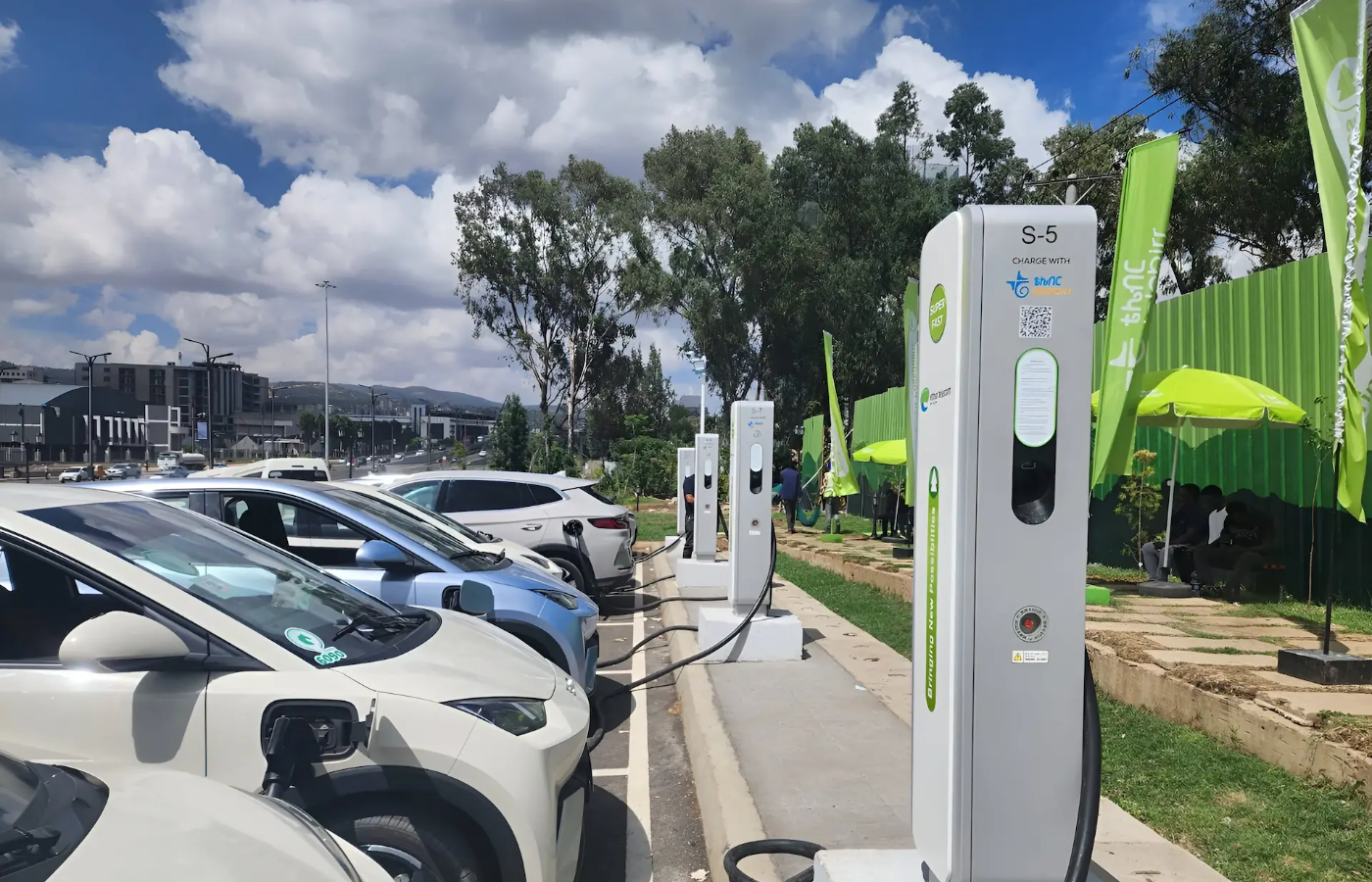
Ethiopia strengthens its leadership in electric mobility with a bold expansion of charging infrastructure — a model for Africa’s clean transport revolution.
By EV24 Editorial Team | December 11, 2025
🚗 A Major Step Toward Sustainable Urban Mobility
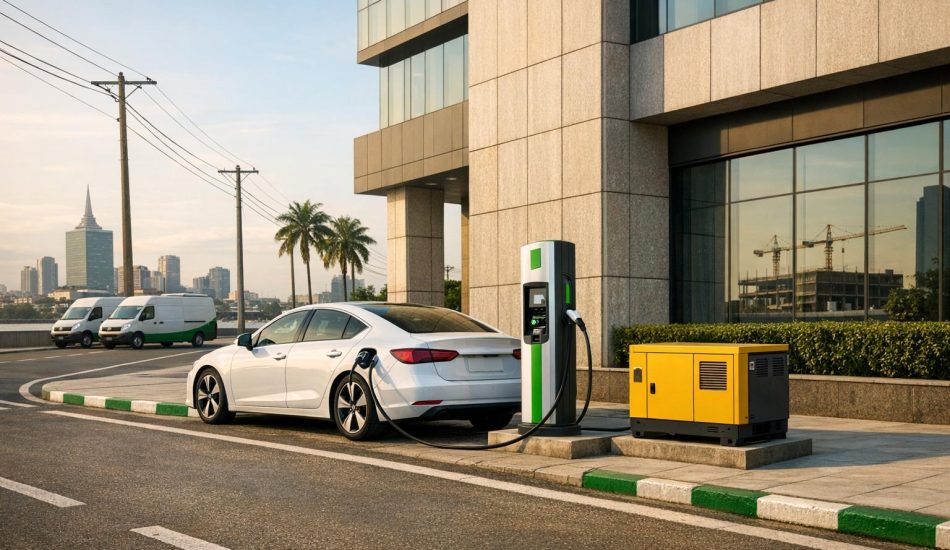
The Ministry of Transport and Logistics (MoTL) of Ethiopia has officially announced the construction of 54 new fast-charging stations for electric vehicles in Addis Ababa.
Once completed, the Ethiopian capital will host over 150 public charging points, reinforcing its position as one of the most advanced electric mobility hubs in Africa.
According to State Minister Bareo Hassen, this expansion is a strong signal of the government’s commitment to cleaner, smarter, and more inclusive mobility:
“This expansion reflects Ethiopia’s commitment not only to promoting clean vehicles but also to developing the infrastructure required to support their growth,” Bareo said.
The new network will be deployed along the city’s main transport corridors, connecting residential areas, commercial zones, and major roads — making electric mobility both practical and accessible.
⚙️ Building the Backbone of Ethiopia’s EV Ecosystem
Ethiopia’s approach to e-mobility is not limited to vehicle imports. The government has understood that infrastructure is the foundation of adoption.
By ensuring the availability of reliable and fast-charging stations, the country is removing one of the key barriers to EV uptake across Africa: range anxiety.
The newly announced 54 stations will complement the existing network of 100+ public charging points, as well as more than 460 individual chargers installed by private importers and assemblers.
Among the private sector leaders, Ethio Telecom stands out. In late November 2025, the company inaugurated its third super-fast charging hub around the Summit–Fyel Bet area.
Equipped with 16 AI-enabled chargers, this new hub can serve up to 48 vehicles simultaneously, making it one of the most efficient charging sites in East Africa.
🧩 Regulation, Standards, and Long-Distance Vision
In early 2025, Ethiopia took a major regulatory step by adopting a national directive for EV charging systems.
This framework sets unified standards for installation, safety, and pricing — key to ensuring interoperability across public and private networks.
The directive also outlines a strategic spacing of fast-charging stations every 50 to 120 kilometres along national highways, enabling drivers to travel confidently across the country and setting a precedent for regional integration of EV infrastructure.
🔋 A Rapidly Growing EV Market
The results of Ethiopia’s proactive policy are already visible.
As of late 2025, the country counts around 100,000 electric vehicles, representing nearly 7% of all registered vehicles — one of the highest ratios in Africa.
The local manufacturing ecosystem is also taking shape, with 16 EV assembly plants operating nationwide.
Together, they offer an annual production capacity of:
- 63,000 two- and three-wheelers,
- 14,900 automobiles,
- 1,200 light trucks,
- 3,500 minibuses and buses.
These factories are transitioning from semi-knocked-down (SKD) to completely-knocked-down (CKD) production models, signalling Ethiopia’s ambition to move up the industrial value chain.
Although the current capacity utilisation is around 10%, the country’s commitment to localisation and technology transfer is setting the stage for rapid expansion.
🏗️ National E-Mobility Strategy: A Vision for the Future
The new charging stations in Addis Ababa are part of Ethiopia’s National E-Mobility Strategy, a comprehensive plan to build a robust EV ecosystem nationwide.
Under this strategy:
- Addis Ababa is mapped to receive 1,176 charging centres.
- Regional cities will host an additional 1,054 stations, creating a total of more than 2,200 charging sites across the country.
This unprecedented network will ensure that every major route, city, and region is ready to support the growing number of electric vehicles — from compact urban EVs to commercial fleets and electric buses.
🌍 Ethiopia as a Model for Africa’s E-Mobility Transition
Ethiopia’s approach offers valuable lessons for other African nations:
- Strong public-sector leadership;
- A clear regulatory framework;
- Investment in local manufacturing;
- And a nationwide charging infrastructure strategy.
By aligning industrial policy, green transport objectives, and public-private cooperation, Ethiopia is positioning itself as a continental pioneer in electric mobility.
🔌 EV24.africa: Supporting Africa’s Charging Future
At EV24.africa, we celebrate Ethiopia’s progress as a milestone for Africa’s clean-energy transition.
Our mission is to connect the continent’s markets with reliable electric vehicles, charging infrastructure, and after-sales support — offering a 360° solution from sourcing to delivery and service.
Ethiopia’s journey proves one thing: the future of mobility in Africa is electric, and it’s already taking shape.